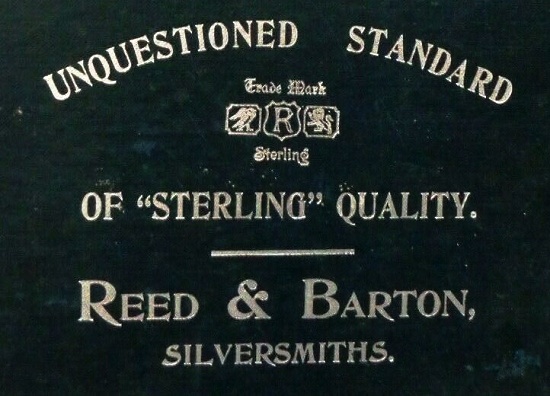
Reed and Barton Jewelry Trademark History

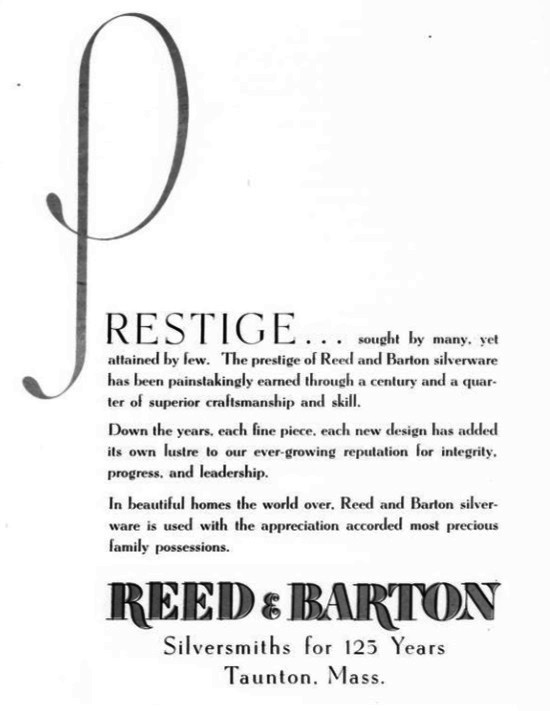
The history of the oldest house in the silver business of the United States Reed & Barton dates back to 1824, founded by Isaac Babbitt. Isaac Babbitt started experimenting in 1822 at the back of his jewelry store on Merchants Row in Taunton, southern Massachusetts.
He defined the whole venture as a “search for something better” for the tables of the American people. Soon William Crossman joined Isaac Babbitt, and in May 1824 they founded the Babbitt and Crossman firm.
By 1828 their small factory employed 15 men, among them Henry G. Reed, a spinner, and Charles E. Barton, a solderer. In 1830 they moved to a better location. So, a 3-story building together with a dam, mill-race, and large water wheel were constructed on Mill River in Taunton.
After the move business became brisk, and the economic crisis developed throughout the country in late 1834. In April, 1835, Henry G. Reed and Charles E. Barton, as managers, together with eight men and one woman took their places at the benches. The company to which each of the two men had devoted his entire young working life was now in their hands.
Noteworthy, from 1837 to 1847 the firm had name Leonard, Reed & Barton.
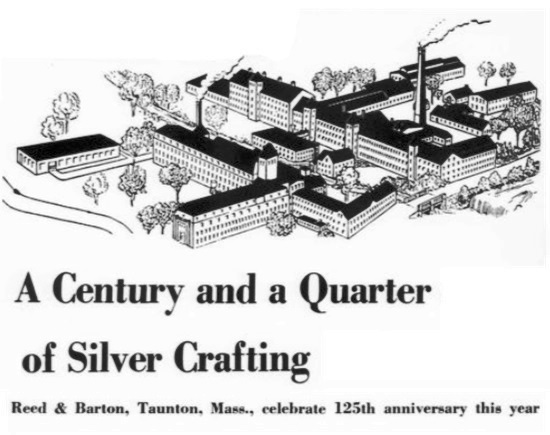
More than ever, the foundation stone of the newly reorganized company was quality. Thanks to Henry G Reed a generation of fine factory workmen set the standards for craftsmanship that have always distinguished Reed and Barton wares. As early as 1838 Reed & Barton received first prize at the American Mechanic’s Fair in New York. For the first time, top quality U. S.-made tableware was available to the American people, and at prices far below that of foreign make.
History of Reed and Barton Jewelry
By 1865 sales had passed the quarter-million mark and were steadily increasing. Both the Britannia ware and silverplate business were excellent, and the factory began to branch out into the manufacture of knives, forks and spoons.
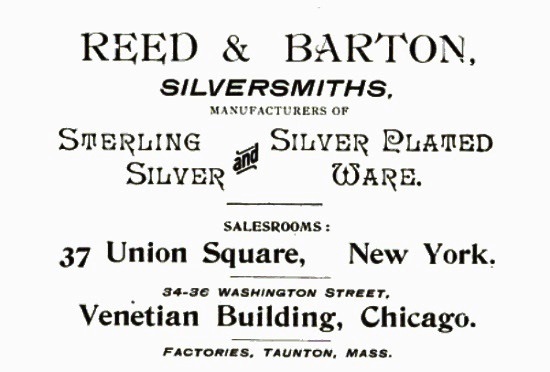
Mr. Reed was one of the leading manufacturers in southern Massachusetts, and was the oldest engaged in active business. Reed & Barton goods were are all over the world, and their traveling men invaded Africa and India. Mr. Reed always took an active interest in the growth and prosperity of his native city.
He was a director of the Taunton National bank since 1851, and a trustee of the Taunton Savings bank since its organization in 1869. Also, a director of the Taunton City Mission and president of the Reed family association of Taunton since 1873.
Henry Gooding Reed
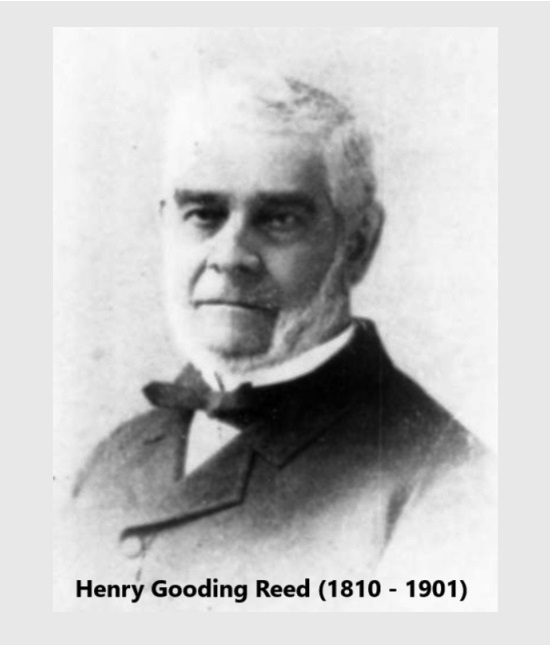
Mr. Reed had been married three times first to Clara, daughter of Isaac White, of Mansfield, Frances Lee Williams, daughter of Jared Williams, of Dighton, and third, to Delight R, daughter of Christopher Carpenter. His children were Clara Isabel, Henry Arthur, Ida Frances, and Fannie Lee. Henry Reed died in 1901 at the ripe old age of 91, but the members of his immediate family controlled the business.

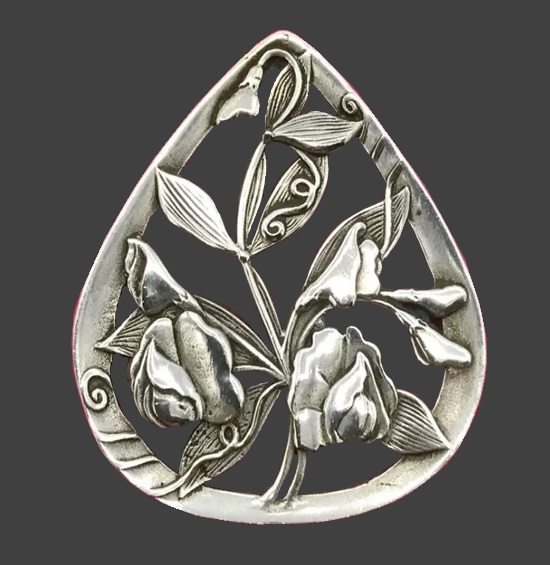
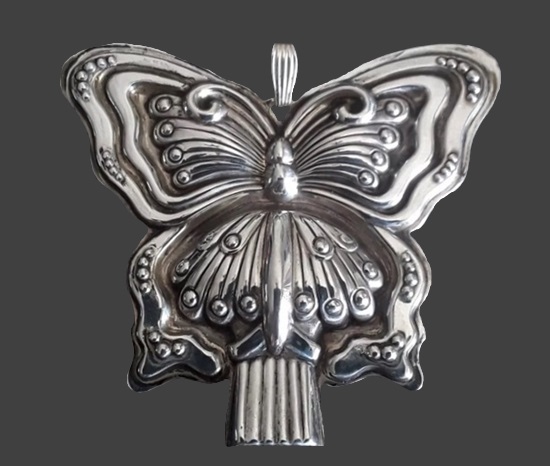
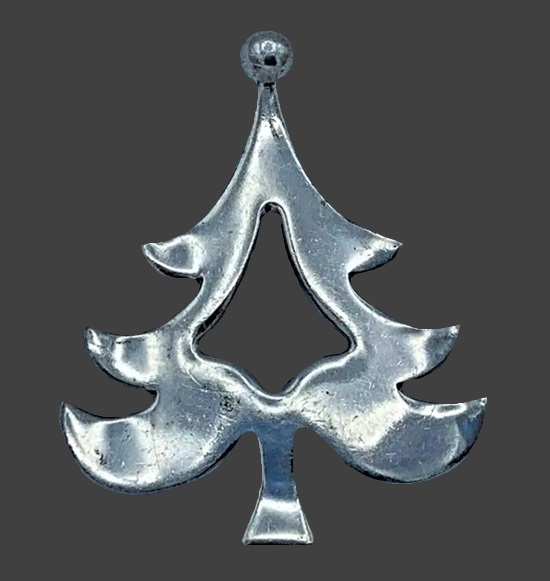
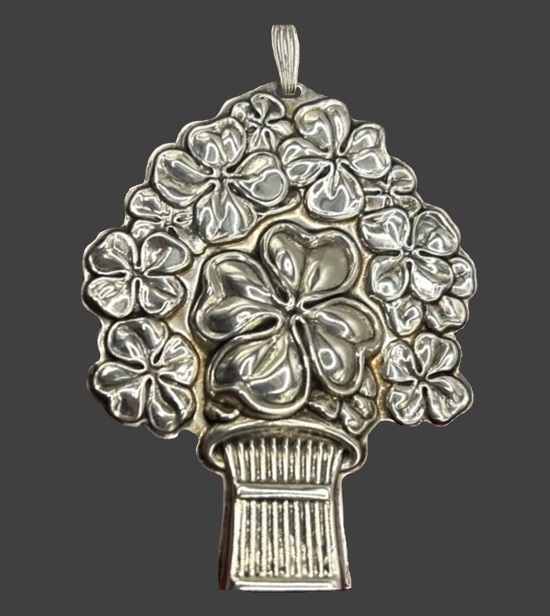
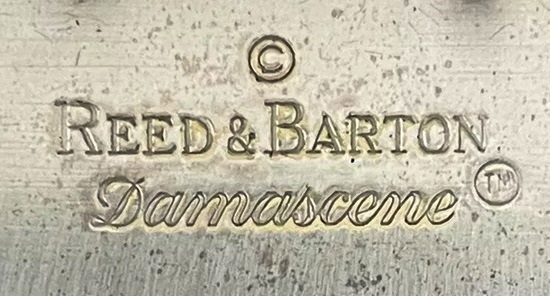
Creating jewelry pieces, the company’s craftsmen used sterling silver, copper, 24 K gold, bronze, and cloisonne enamels. Some limited collections have become iconic and today are collectible rarities. In particular, Damascene, Egyptian Revival, Christmas crosses, month flower pendants, fork and spoon bracelets.
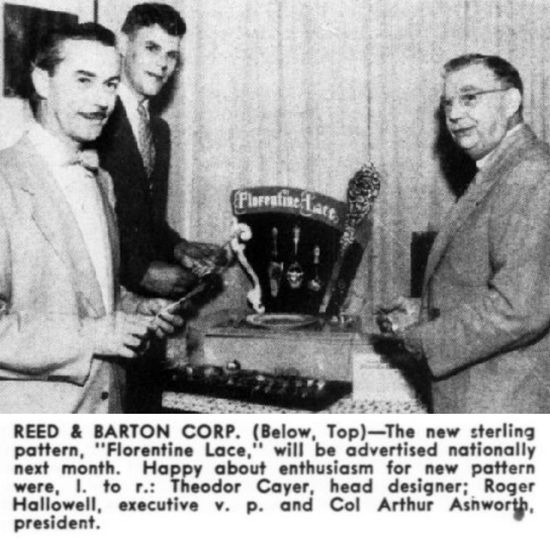
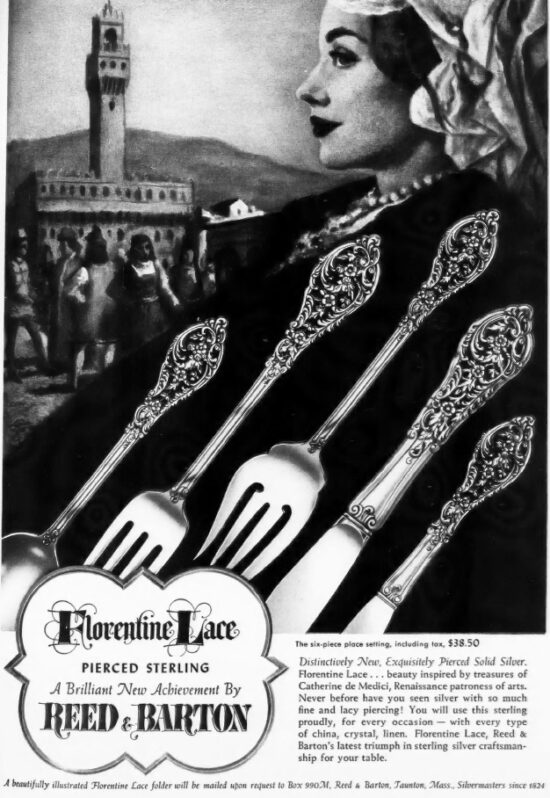
The new sterling pattern, ‘Florentine Lace’, advertised nationally since 1950. Happy about enthusiasm for new pattern were Theodor Cayer (left), head designer; Roger Hallowell, executive vice-president, and Col Arthur Ashworth, president.
During the Civil War and World Wars, the company carried out orders from the state. The company ceased to exist in 2015, having become the property of The Lenox Company.
Antique and Vintage Reed and Barton Jewelry