Charles Tiffany Founder of Iconic Jewelry Brand
The world famous jewelry house of Tiffany & Co with headquarters in New York and branch houses abroad began its history in 1837. Its founder was Charles Lewis Tiffany (1812 – 1902), who raised the craft of the goldsmith and silversmith to a position second to none among the industrial arts.
When Charles Tiffany was only fifteen years of age he made his start in life by joining his father’s business. Comfort Tiffany opened a little country store in Danielson ville and entrusted his eldest son with full management of the store. Charles Tiffany kept the books of the store, and spent the next ten years of his life as a village shopkeeper.
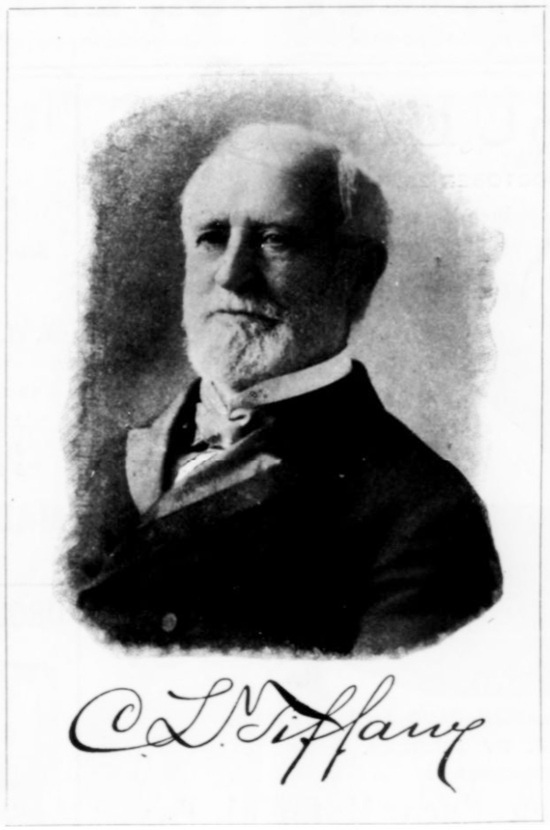
When the business had become firmly established Charles Tiffany made frequent trips to New York for supplies. During his frequent trips to New York City he also made numerous valuable business contacts. The year 1837 was the turning point in his life. From the little Connecticut village he ventured out into the maelstrom of metropolitan life.
At the time, the metropolis had a population of over 200,000 and was teeming with businesses, so it took considerable courage for a country boy to plunge into the maelstrom of urban business life. However, this only strengthened his resolve to achieve success in the most difficult place.
Tiffany & Young
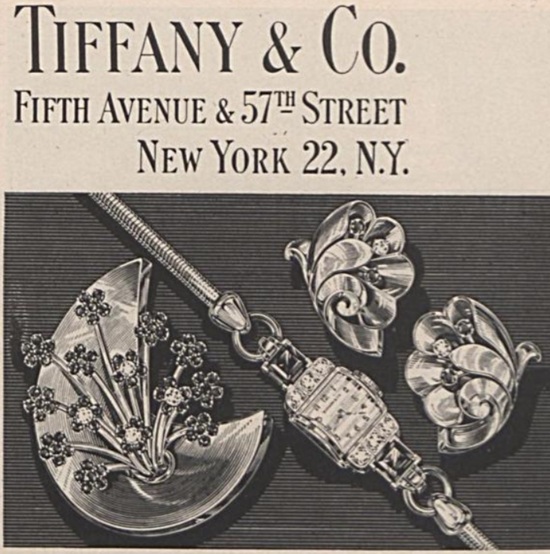
Borrowing $1,000 from his father, he entered into partnership with John D. Young, a former schoolmate, who had come to New York some six months previously. They established the firm of Tiffany & Young, fancy goods and stationery business at 259 Broadway.
Tiffany & Young didn’t buy ordinary stock or fixtures, for they wanted to attract attention. Therefore, they stocked their place of business with East Indian curios, Chinese and Japanese goods, pottery and oddities. Later, they added to their stock foreign glassware and Parisian jewelry. During the following four years the business flourished and steadily increased in size.
Tiffany, Young & Ellis
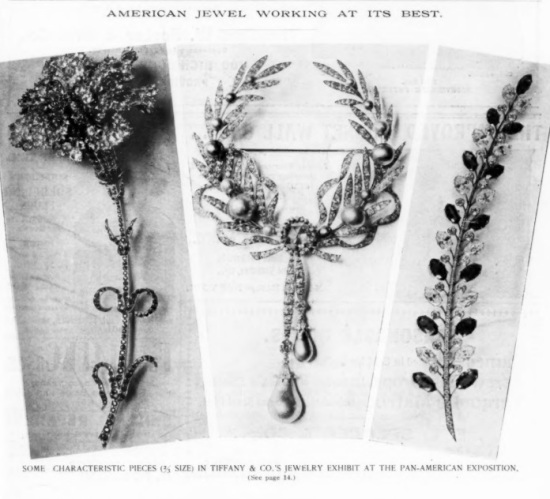
In 1841, J. L. Ellis joined the partnership, and the firm name became Tiffany, Young & Ellis. By this time the business had grown to such proportions that Tiffany decided to send a member of the firm abroad. So, it was John D. Young who had to purchase stock from the foreign markets. Noteworthy, at that time it was an almost unheard-of thing for an American to send a buyer abroad. This idea, like all other of Tiffany’s ideas, proved to be full of wisdom.
The company abandoned cheap French and German products and offered its customers Roman jewelry, Florentine mosaics, and expensive trinkets of previously unheard-of wealth in America. This line of goods significantly increased the value of their inventory and the company’s reputation.
1848 – Start of jewelry production
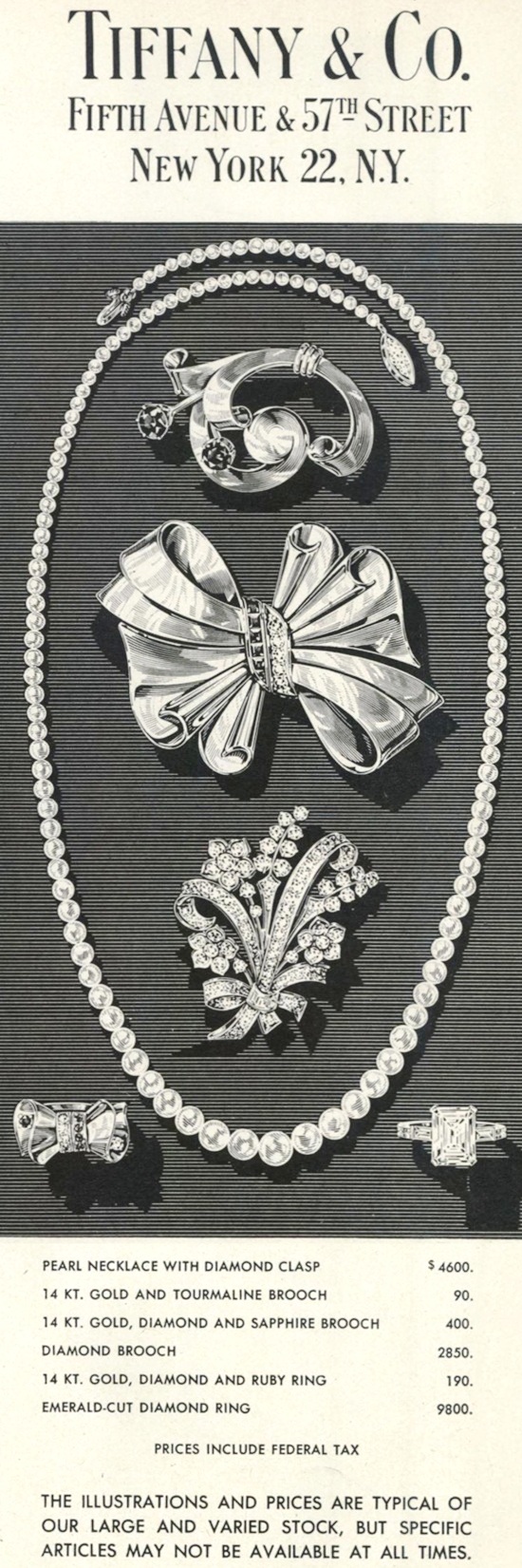
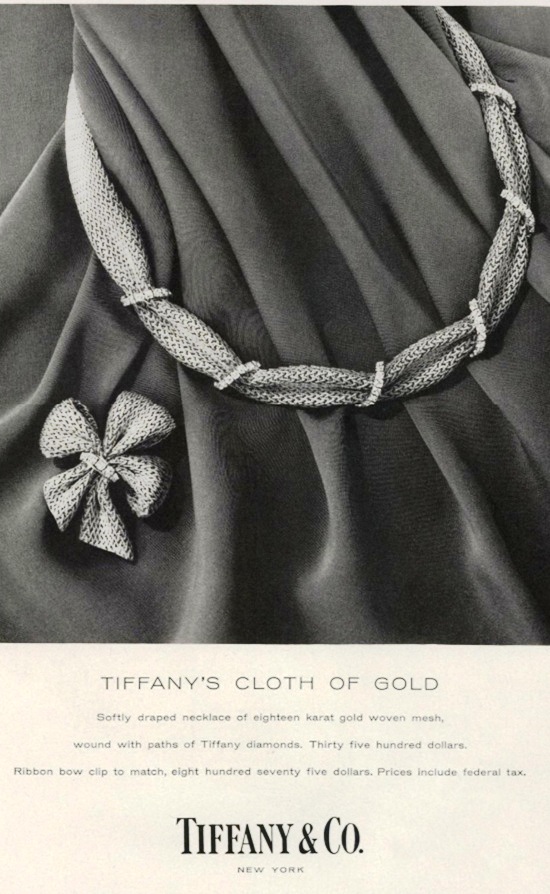
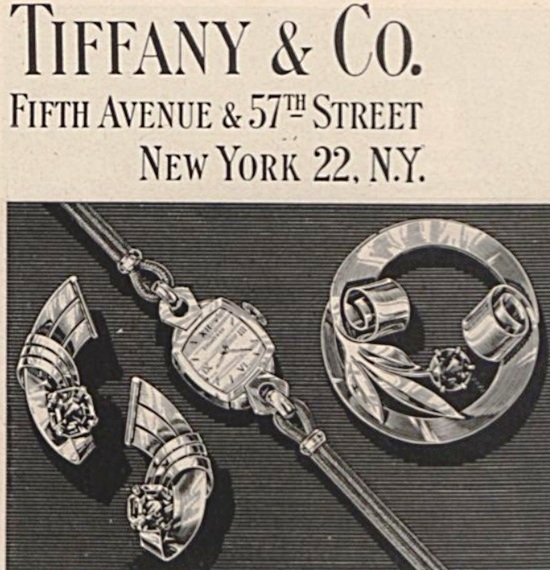
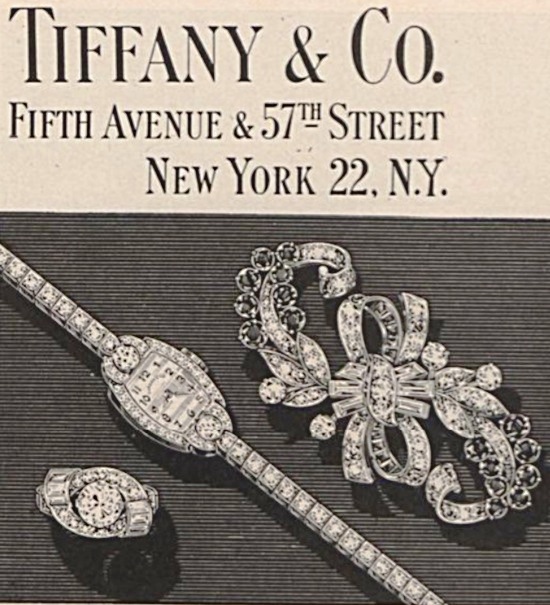
The most important milestone in the company’s history came in 1848, when it began producing its own jewelry. Moreover, this line of business soon became the most important for the enterprise. In addition, the Tiffany house was in the front rank of diamond merchants, and its collection contained some of the most famous pieces of jewelry in the world.
1853 – Tiffany & Co
In 1850, Gideon F. T. Reed, formerly of Lincoln & Reed, the leading jewelry firm of Boston, was admitted into partnership. Soon, their rapidly developed Paris branch became one of the largest jewelry establishments in France. In 1853, both Young and Ellis retired from business. So, the name of the firm became Tiffany & Co, and the business moved to 550 Broadway.
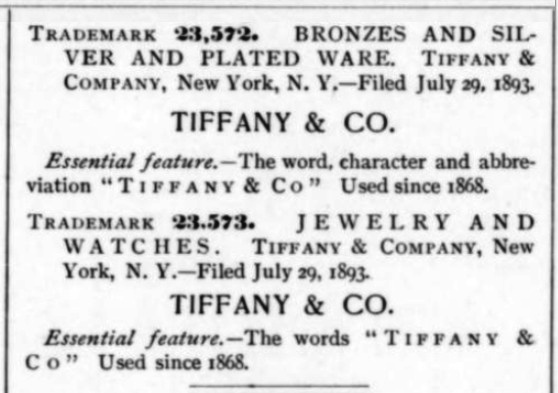
The firm was incorporated as a manufacturing company under the laws of the State of New York, in 1868, with Mr. Tiffany as president and treasurer. Gideon F. T. Reed became vice-president; Charles T. Cook, general superintendent and assistant treasurer, and Geo McClure, secretary.
Branch house in London
In 1868 Tiffany established a branch house in London, which, like the Paris house, met with instantaneous success. The establishment of the London branch was followed by the construction of a large plant for the manufacture of watches in Geneva.
In 1870 Mr. Tiffany moved his business to the corner of 15th Street and Union Square, where it still is. With the removal to Union Square, many new departments were added to the business, making it the most progressive and the most honored jewelry house in the world.
Tiffany was the first to introduce into the US the English standard of sterling silver, which Great Britain protected with a “hall mark.” Charles Tiffany also established the hallmark in the USA as the standard of excellence. In 1867 Tiffany’s productions won for American silverware the first award of merit from a foreign jury. This was at the great Paris Exposition.
Charles Tiffany was named a Chevalier of the National Order of the Legion of Honor in France. He also received the Praemia Digno award from the Emperor of Russia in recognition of his works exhibited abroad. Furthermore, he was appointed royal jeweler to Queen Victoria, the Prince of Wales, the Tsar of Russia, the kings of Denmark, Sweden, and Italy, the Khedive of Egypt, and the Shah of Persia.
The list of his achievements was enormous. Tiffany was the founder of the New York Society of Fine Arts and a trustee of the Metropolitan Museum of Art and of the American Museum of Natural History. He was a fellow of the Geographical Society and a member of the New York Historical Society. The names of leagues, chambers, banks, clubs, societies and charitable and philanthropic organizations where he was a member or director were also numerous.
Charles Tiffany died at his home at 252 Madison Avenue on February 18, 1902, at age ninety. By this time, his company was valued at over $2 million and was recognized as the most prominent jewelry company in North America.