C. D. Peacock Jewelry Company History
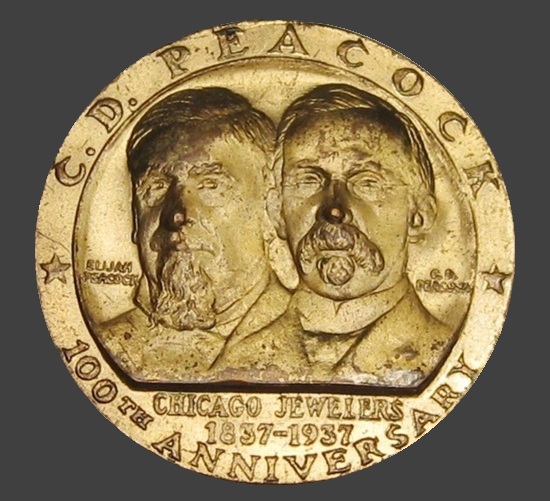
Third generation jeweler, Elijah Peacock (1818–1889) came to Chicago in 1837 and started in his trade of jeweler and watch repairer. He came of a family of English gold and silver smiths. The name of Peacock adorned a jewelry store at Chester, England, 300 years ago.
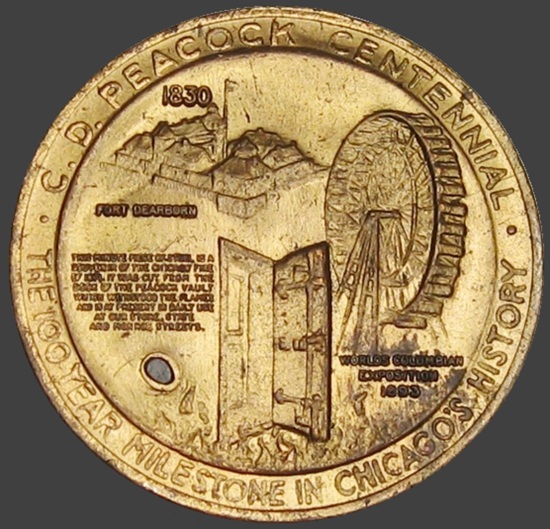
Noteworthy, five years before the founding of the Peacock Company, Chicago had a population of about 100 people and only five or six log houses, not counting the fort. When Elijah Peacock founded his company, Chicago was newly incorporated as a city with a population of 4,000 people.

In fact, Peacock employed many prominent figures who would later play important roles in the development of Chicago’s industrial and political life. Elijah Peacock continued at the jewelry business until the great fire of 1871, after which he devoted much of his time to buying and selling real estate.
Charles Daniel Peacock
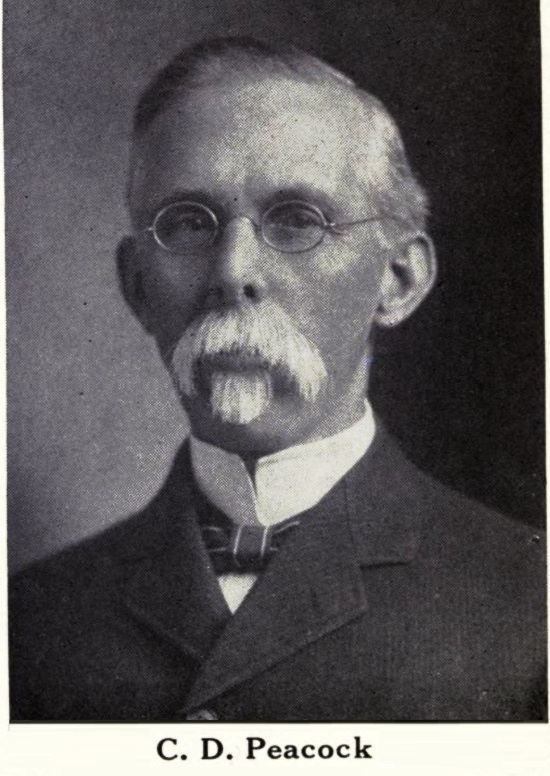
A native of Chicago, Charles D Peacock (1838 – 1903) was a pioneer retail jeweler of Chicago. He was a mere boy when started to work in the jewelry store of Elijah Peacock, his father, on Lake Street. The store was a small room, where young Peacock built the fires, ran errands, and delivered articles to the pioneer settlers of those days. Besides, he tinkered at the work bench, cleaning the watches and clocks, etc.
After the great fire Chas Peacock started to renew the business of the burned jewelry store, at Randolph and Franklin Streets. He went to 96 W Madison street where he remained during the reconstruction period following the fire. He made considerable money and with this capital moved to State and Washington streets, where he opened business on a large scale.
Windows of C D Peacock Jewelry Store
The Peacock store remained there for nearly 25 years, when an increased trade demanded a removal to the next location, 199 State Street.
The windows of the C D Peacock & Co. store on State Street were of particular interest to local residents. Every year, on Christmas Eve, marvelous installations, true works of art, would appear in the storefront. These installations became the talk of the town, and newspapers were full of articles about them.
Undoubtedly, Charles Peacock, and later his sons who continued their father’s business, understood the value of display windows and used them wisely. Crowds of hurrying shoppers eager to buy Christmas gifts stopped to look at the windows, and some even went inside to buy something.
Incorporation of C D Peacock in 1903
Following the death of their father, his sons continued the family business as corporation, with the eldest son taking over the management position. Charles Daniel Peacock (1871 – 1917), eldest son of the late Charles Peacock and Robert Elijah Peacock (1876 – 1945) were presidents. Walter C. Peacock was secretary-treasurer, and Walter J. Buffington, vice-president and general manager.
In June 1927 C. D. Peacock, Inc celebrated the 90th anniversary of the establishment of the business by Elijah Peacock in 1837. On June 6, 1927, the new store opened, at the corner of State and Monroe Streets. According to newspapers, the new store was “perhaps the finest jewelry store in the USA and Europe”. All day and for days following the store was thronged with admiring friends and customers.
Charles D. Peacock, III
In 1929 Charles D Peacock, III (1907 – 1979), graduated from Babson’s University, and entered the employ of C D Peacock, Inc. He was the son of Robert E Peacock, president.
In 1936 Walter J. Buffington (1873 – 1949), vice president, general manager, and director of C. D. Peacock, Inc completed his 50th year with C. D. Peacock. He was awarded by the company with an extended European trip as a reward for his 50 years of continuous service.

Robert Elijah Peacock, president of CD Peacock Inc, died in 1945, and his son Charles Daniel Peacock III took over the family business.
According to the 1961 Jewelers’ Circular, Bernard P. Smith (1997 – 1961) also headed C D Peacock Co, as president until 1961.
The beginning of the end for Chicago’s oldest jewelry company
The Peacock company merged with Dayton-Hudson corporation in 1969. Charles D Peacock, III retired in 1972, and George H. Tesar became president of the Peacock subsidiary for a short time. Next president of CD Peacock was Charles Dishman. In
1982, Dayton-Hudson sold CD Peacock to Henry Birks & Sons Ltd of Montreal.
In fact, this was the beginning of the end for Chicago’s oldest jewelry company. It went through a series of ownership and presidents, bankruptcy in 1993, and closure.
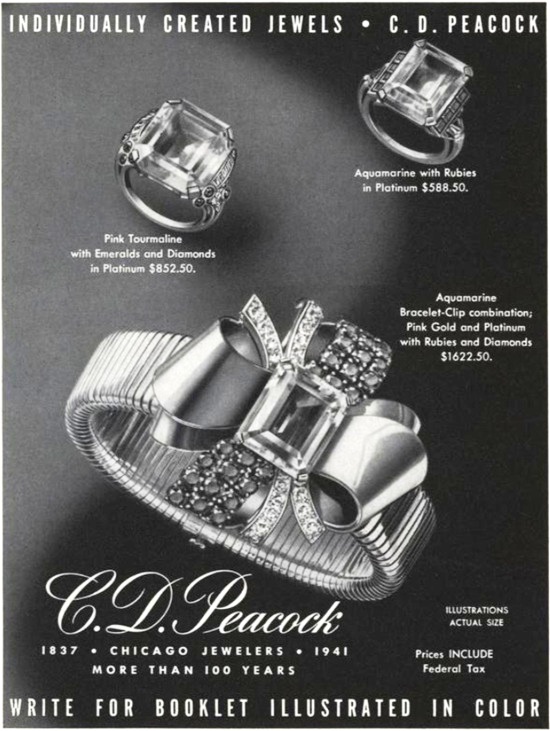
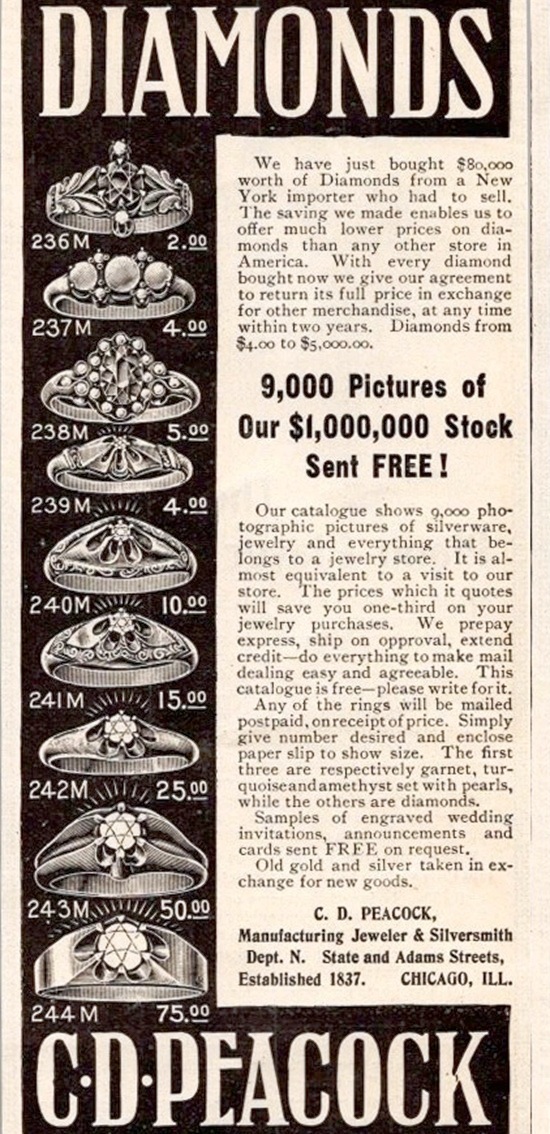
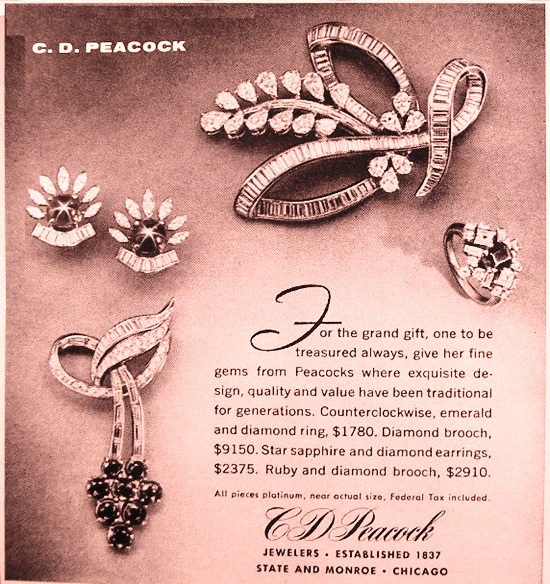
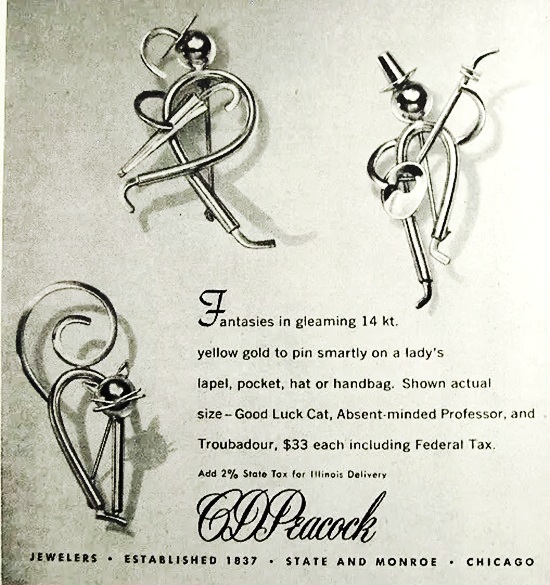
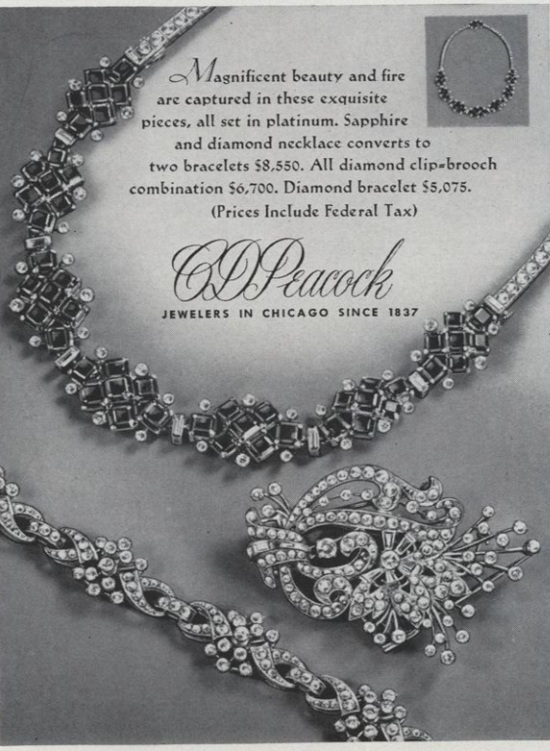
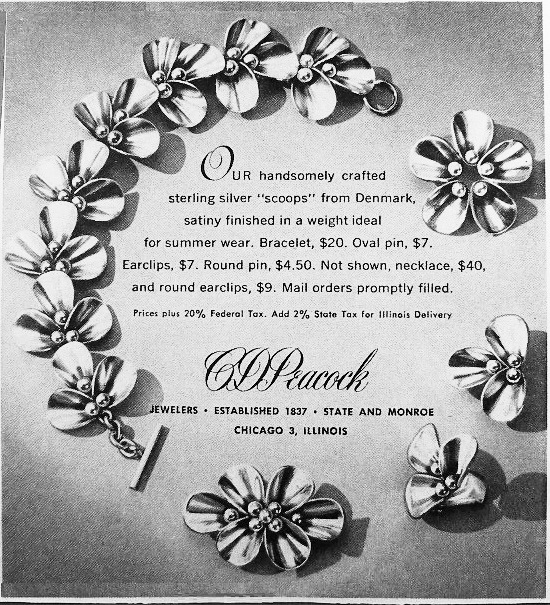
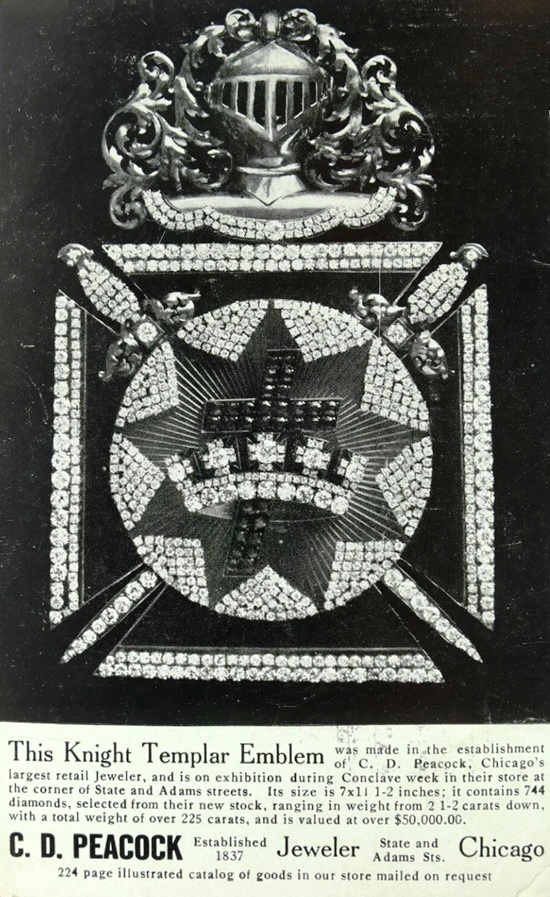
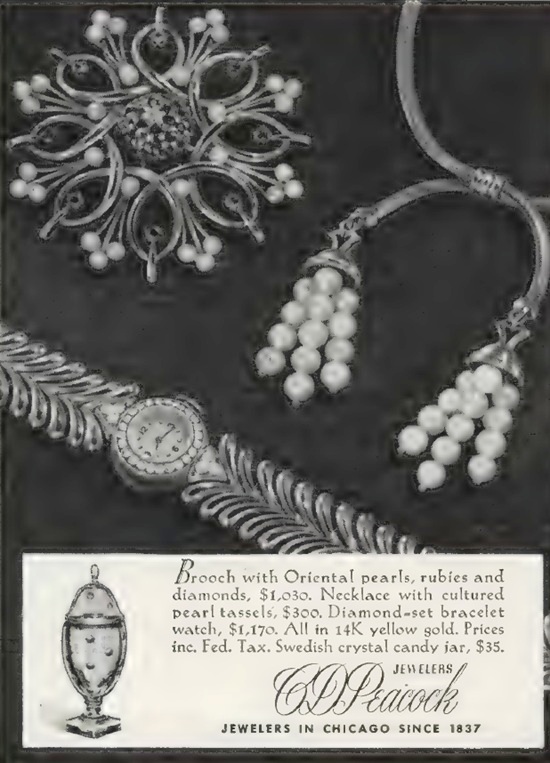
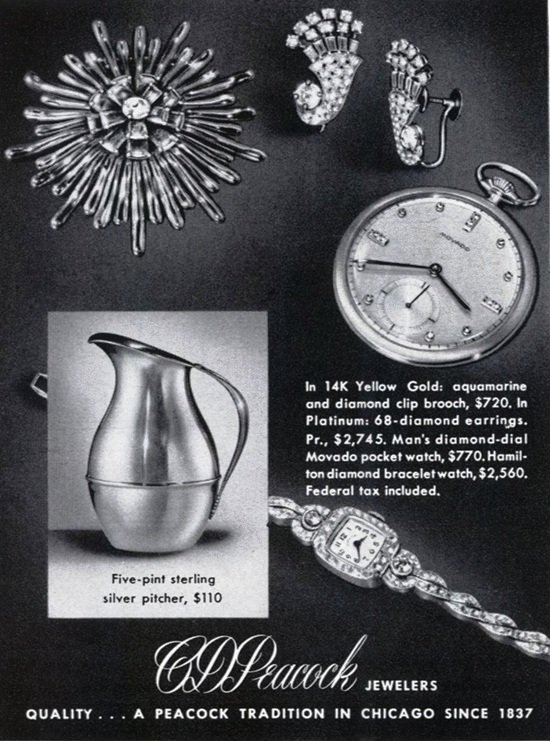
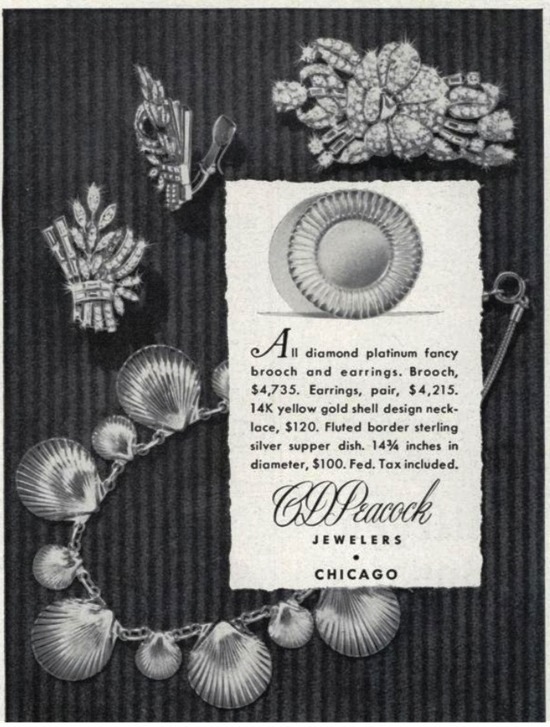
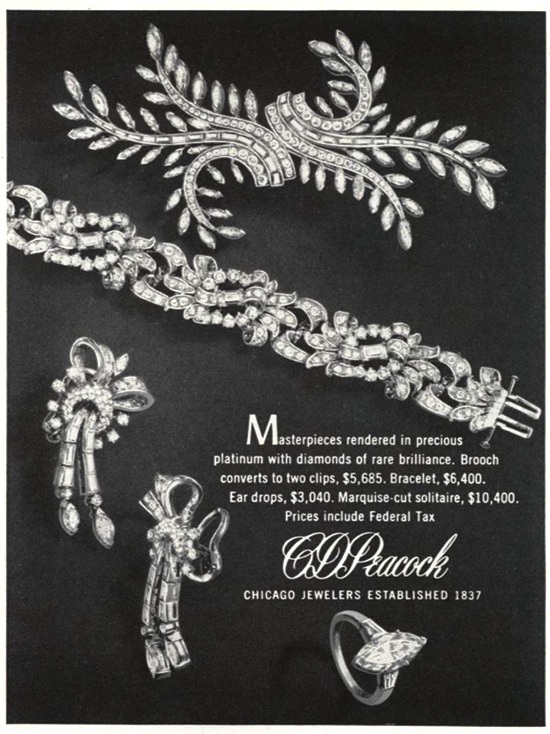
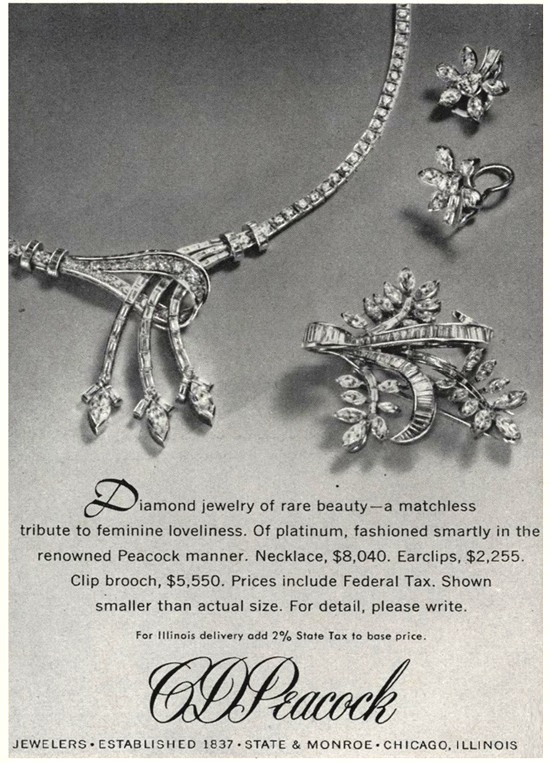
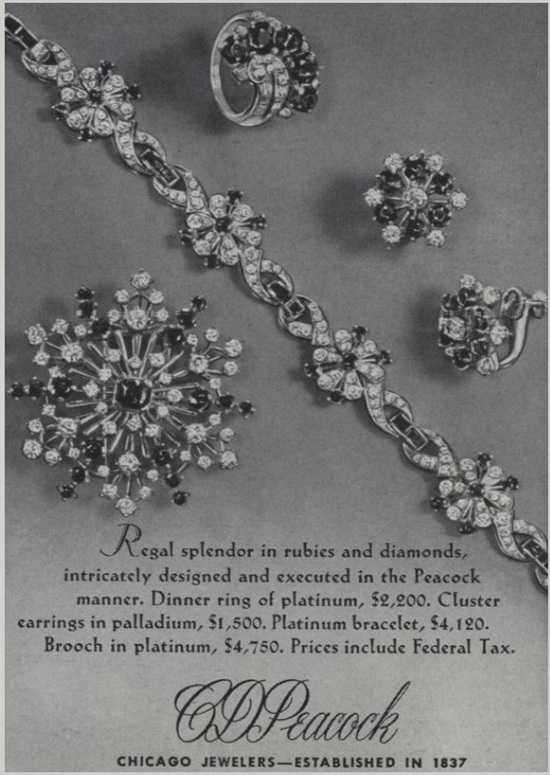
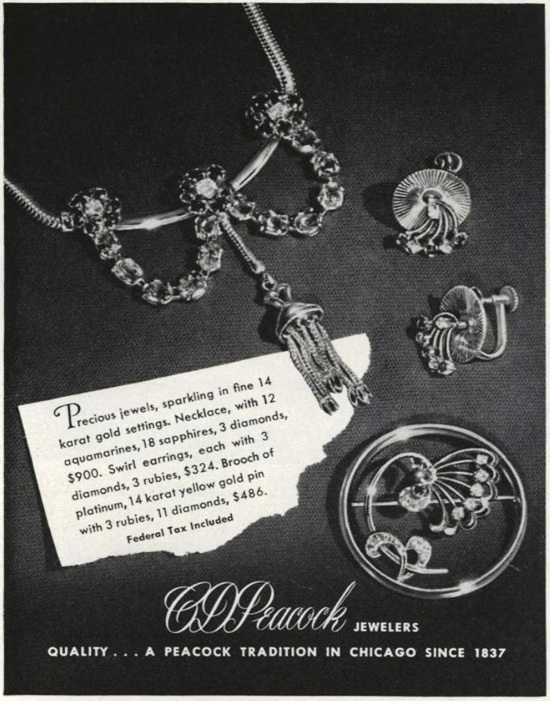
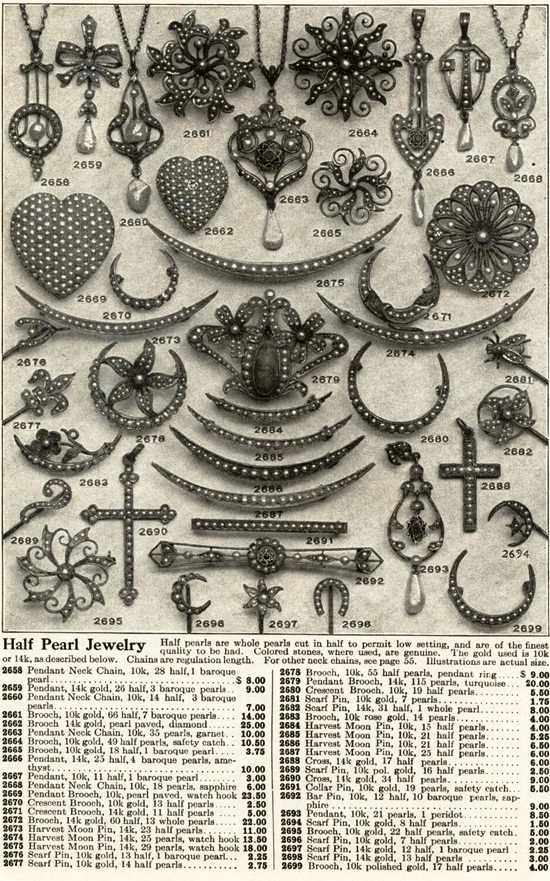
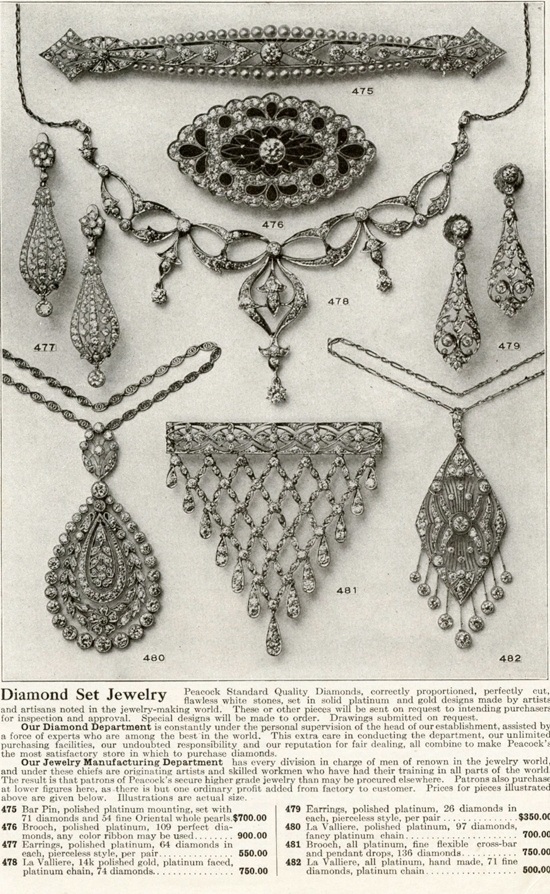
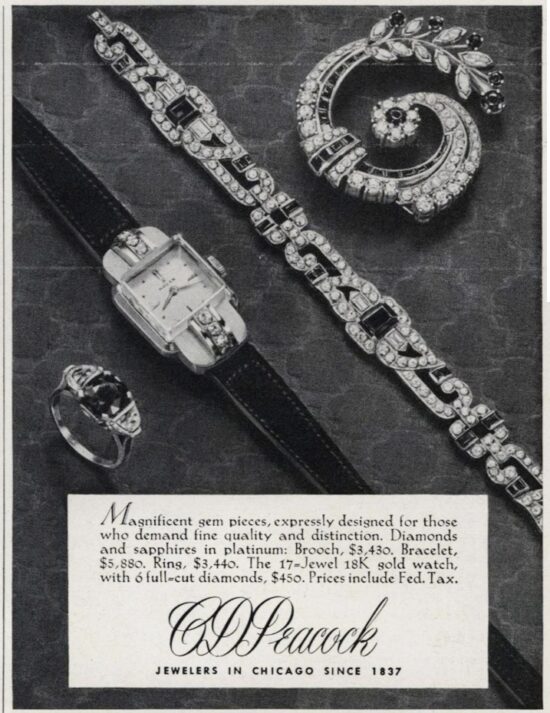
Interestingly, Peacock first advertised its products in 1841, and became the oldest continuous jewelry advertiser in America.