Hickok Jewelry Manufacturing Company History

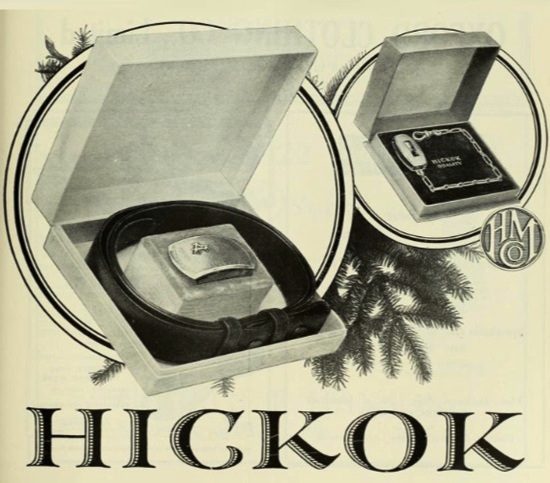
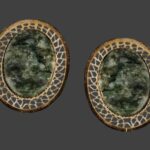
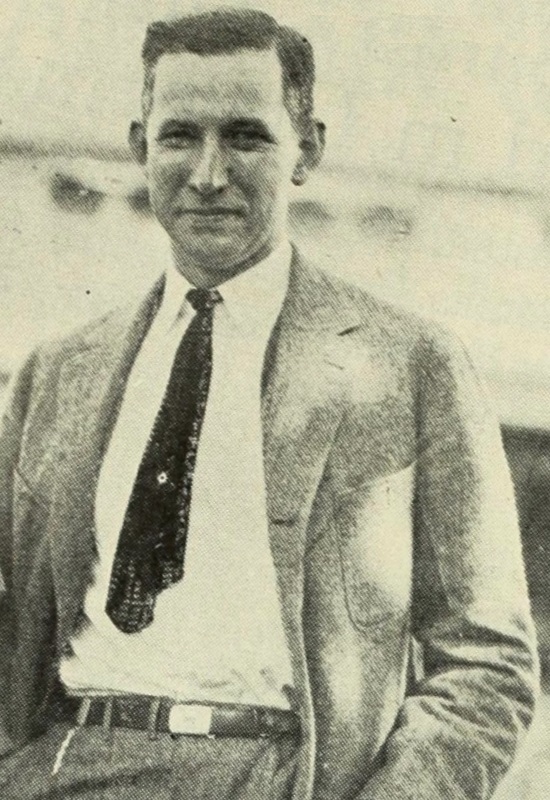
The history of the company, which produced men’s jewelry—buckles, cufflinks, tie clips, and other accessories—began in 1909. Its founder was Stephen Rae Hickok (1885–1945), who purchased a small jewelry business in Rochester, New York.
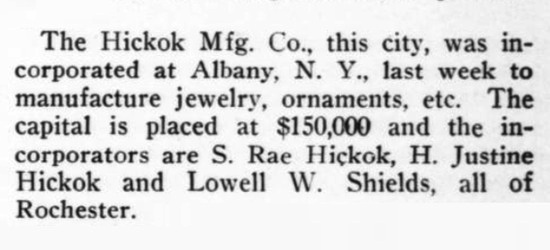
In May 1917, the Hickok Mfg. Company was incorporated with a capital stock of $150,000. Its founders were S. Ray Hickok, his wife, Harrye Justine Hickok, and Lowell W Shields, all of Rochester, New York. Stephen Rae Hickok, president of the corporation, led it for many years until his death in 1945.
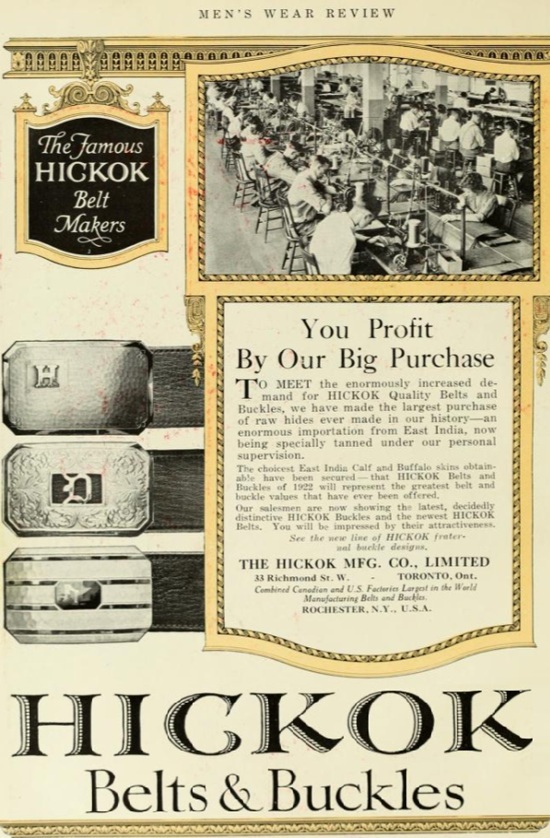
Due to business growth, Hickok Mfg. Co., located in the Cox Building at 36 St. Paul, moved to larger premises at 39-47 N. Water Street in August 1916. The firm opened branches in New York, Chicago, and Toronto, Ontario. In May 1924, Hickok Mfg Co purchased the M. B. Schantz factory at Monroe and Rutgers Streets in Rochester.
Hickok designers
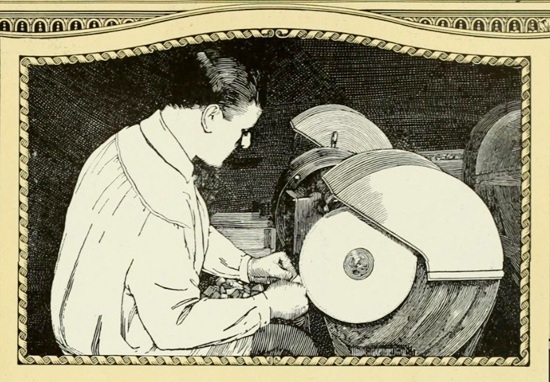
Thanks to the talent of its jewelers, designers, and inventors, the company’s products enjoyed great demand and success from the very beginning. Lowell W Shields (1889 – 1945), for example, was the creator of several patented designs and mechanisms for buckles.
Other Hickok designers included Earl M. Davis, Guy R. Houghtaling, Morris Sacus, Merrill Mabon, and Wiuttiam Dieterich. They developed several buckle designs and mechanisms, belts with which they became true sales hits.
Men’s jewelry line
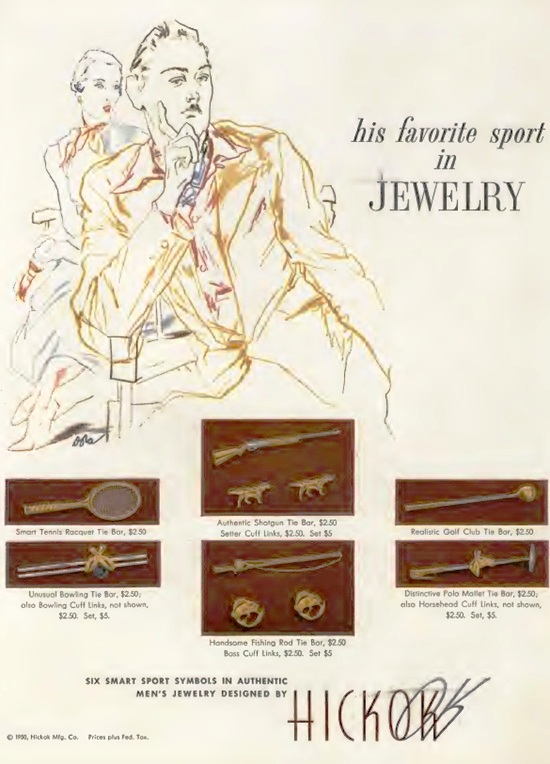
In August 1934, renowned jeweler Edwin N. Vogel joined Hickok Mfg Co. He was responsible for production of men’s jewelry line. From then on, Hickok’s firm became known not only for its magnificent buckles and belts but also for its highly artistic men’s jewelry.
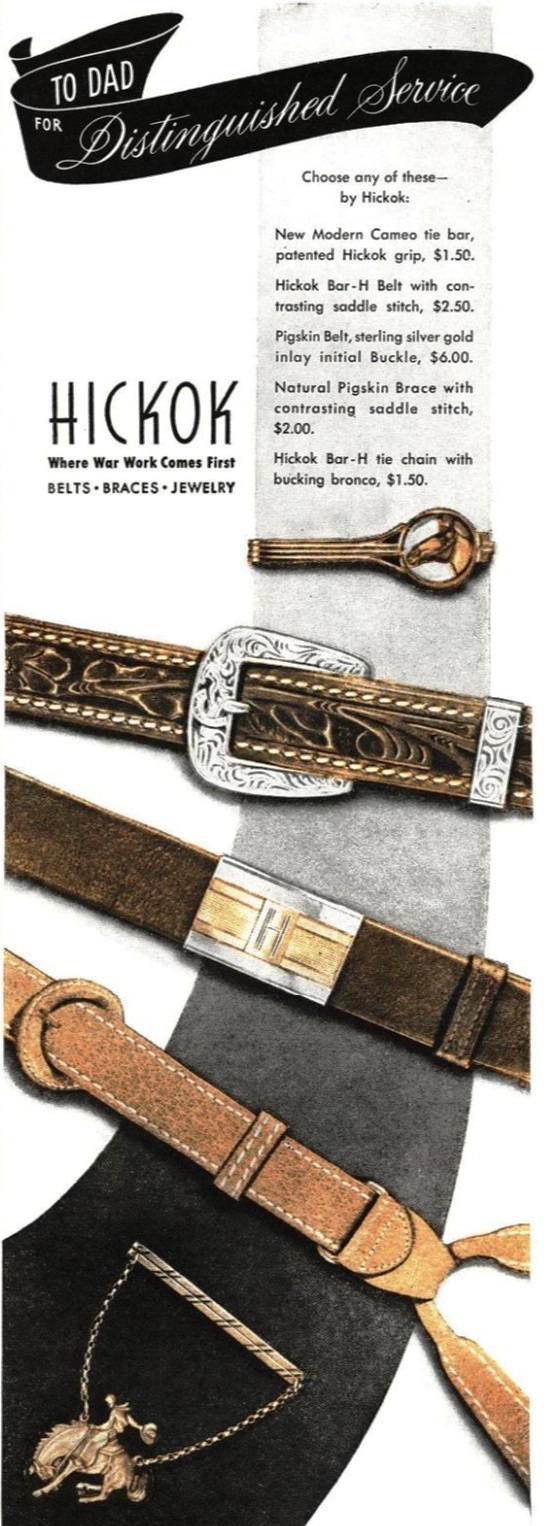
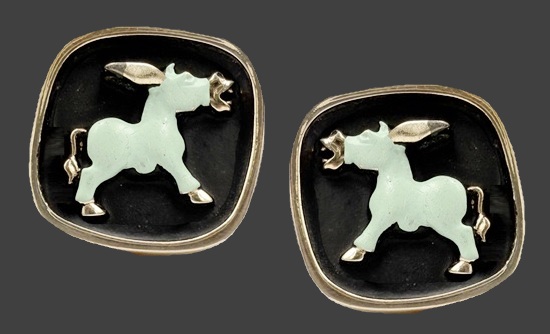
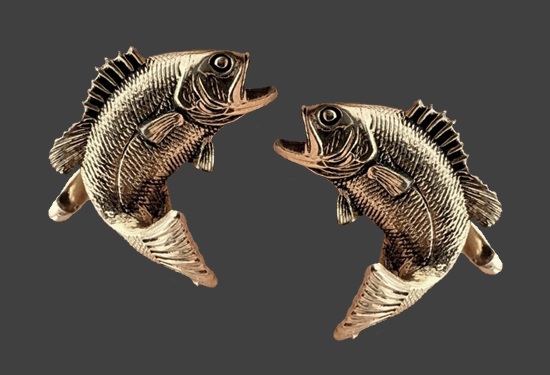
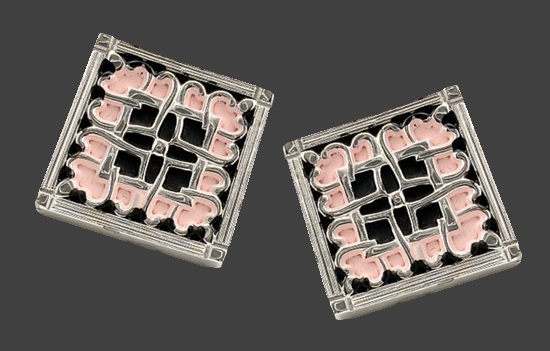
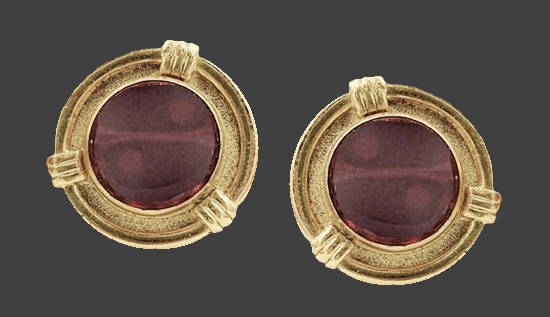
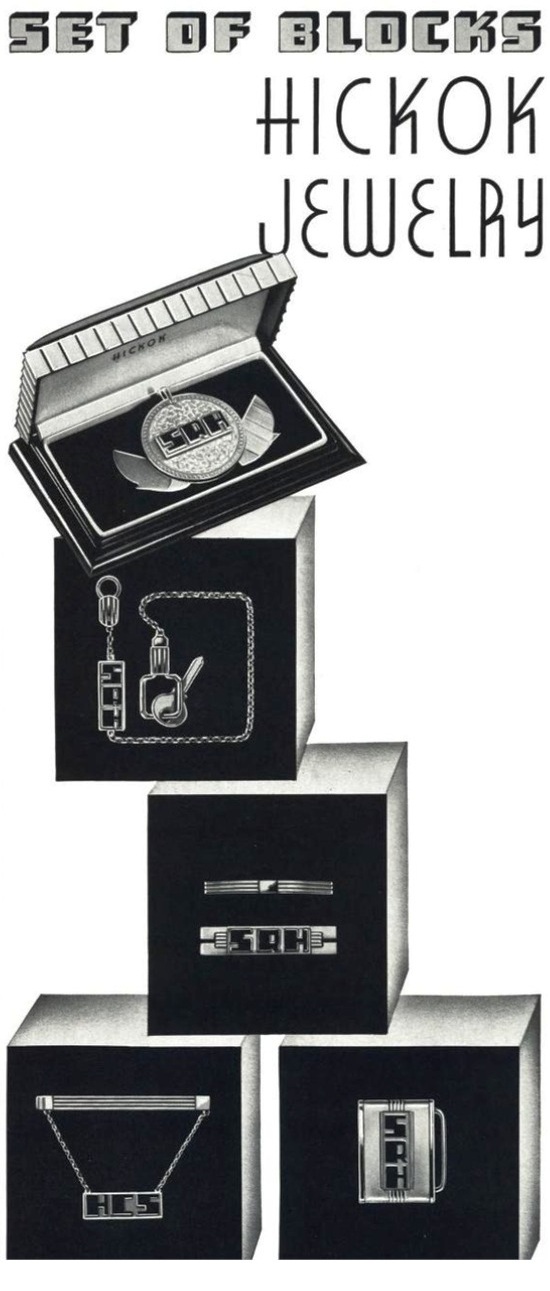
These included cufflinks and tie clips crafted from sterling silver, platinum, gold plated, and enamel. Tie-clips and cufflinks styled with initials, or sculptured from authentic Grand Champion dogs and horses, finely modeled and beautifully finished, looked aristocratic.
Precious Metal Tone Is New Styles For Men
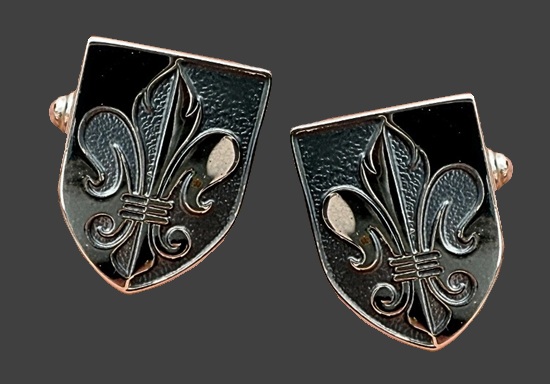
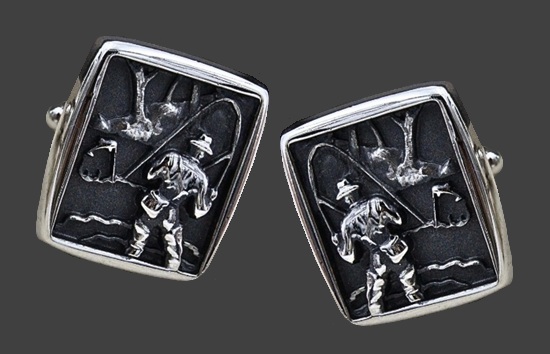
Medieval knights dressed in metal armor and landscapes with hunters and fishermen on cufflinks and tie clips captivated the men’s world. Dressed in shirts, ties, and jewelry in a new metallic hue called “palladium,” these men attracted attention. Edward Berger of Hickok Mfg. Co., president of the Men’s Clothing Club, reported this.
Esquire, the magazine for men declared the new “brilliant frosty blue-gray shade,” the first new men’s color named in honor of precious jewelry palladium.
Great Loss
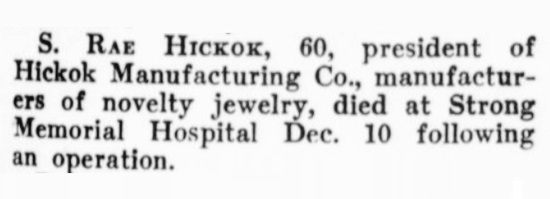
In 1945, the company suffered a great loss with the death in October of Lowell W Shields, a co-founder and vice president of the corporation responsible for product design. Following him, in December 1945, the company’s president, 60-year-old Stephen Ray Hickok, died.
New President – Raymond T Hickok
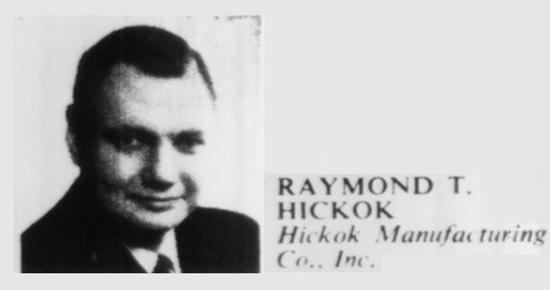
From then on, the company was under the control of Stephen’s widow, Harrye Justine Hickok, and their two sons, Alan O. and Raymond T Hickok. Twenty-seven-year-old Raymond T Hickok (1918 – 1992) became president and led the company for 46 years. Alan Oscar Hickok (1920 – 2010) was executive vice-president of the corporation.
Raymond expanded the company, which became a major manufacturer of wallets, belts, suspenders, cufflinks, tie clips, and other men’s accessories. Hickok branch offices opened in many states. According to the Jewelers’ Circular, the Hickok Company created an additional 500 jobs in the 1940s.
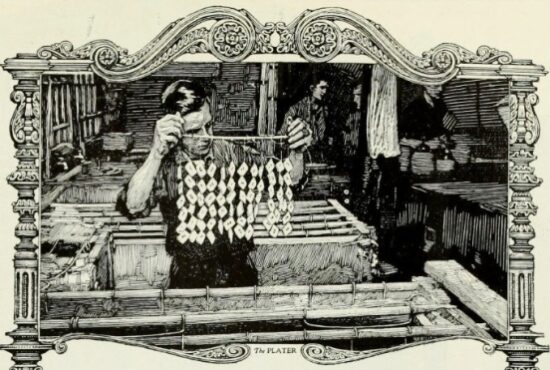
Furthermore, Raymond Hickok instituted a new policy of recognizing outstanding employees. At the initiative of the company’s Junior Board of Directors, management instituted “Employee of the Month Awards,” recognizing one employee each month at each of the four plants.
A significant event in the company’s history was the award established by Ray and Alan Hickok in 1950 in honor of their father, Stephen Ray Hickok. The “Professional Athlete of the Year” trophy, awarded to the best professional athlete of the year in the United States, became widely known as the “Hickok Belt.”
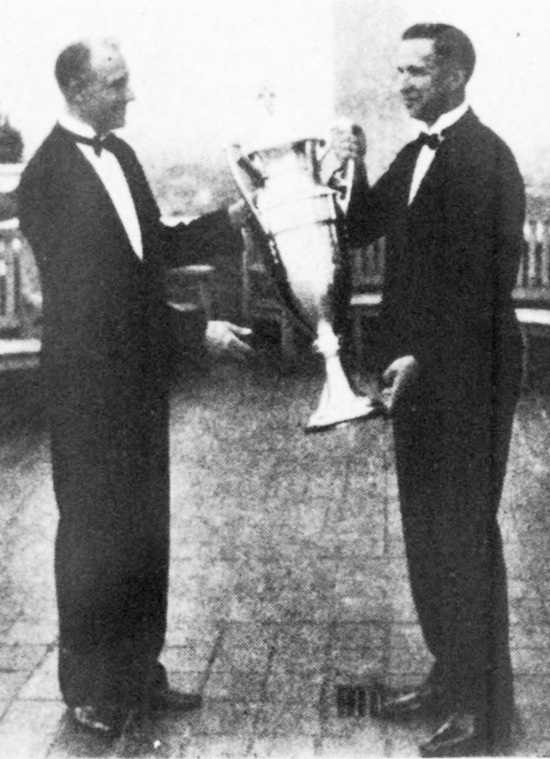
In fact, the Hickok company began the tradition of presenting the belt to the winner as a reward back in the 1920s. Those were gold and jewel-studded championship belts.