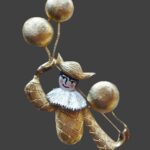
Amita Damascene Vintage Costume Jewelry
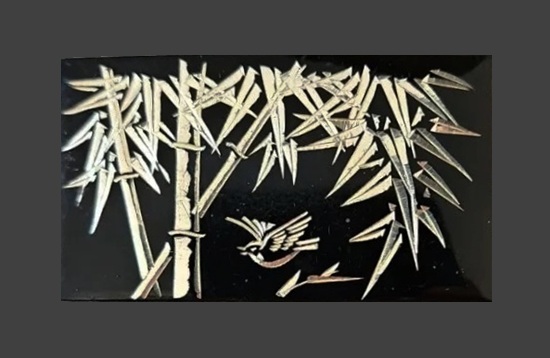
When twenty-year-old Kyoto native Shintaro Amita (1912 – 1990) opened his firm, could he have imagined that his family name would become a world-famous jewelry brand? Recognizable all over the world and today highly collectible, Amita Damascene Co made jewelry with traditional Japanese motifs in the Damascene technique.
As the name suggests, Damascus techniques originated from Damascus. However, Japanese craftsmen have been producing items in this technique for centuries. Notably, Kyoto became the center of production of items in the Damascus ceramic style.

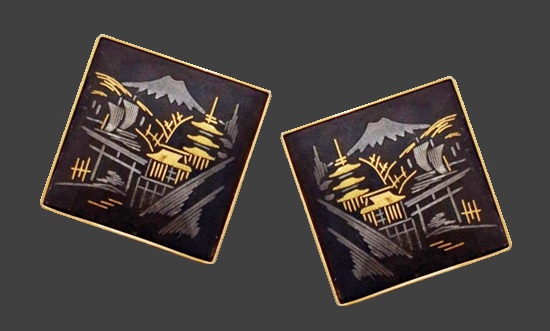
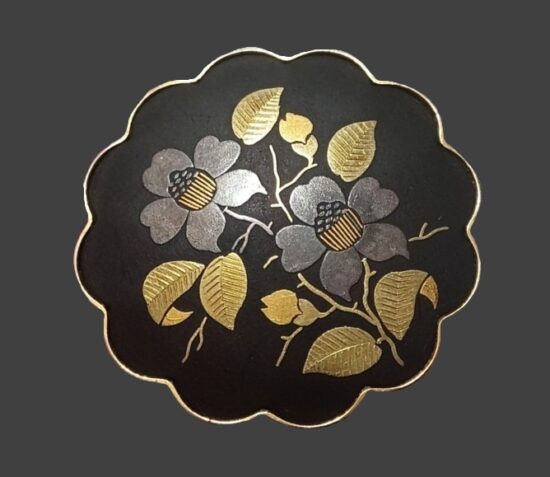
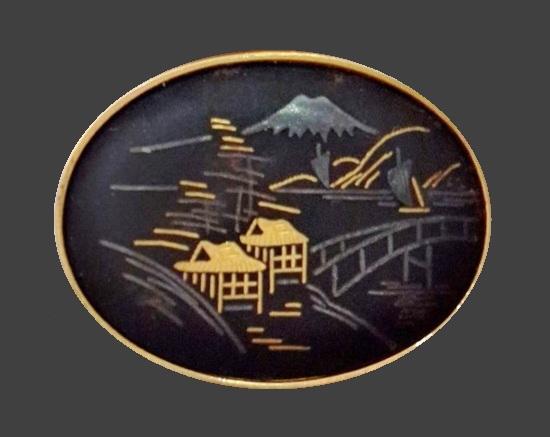
Advertised in the 1950-60s not only in Japan but also in the United States, Amita Damascene Mfg Co produced Genuine Damascene & smoked silver jewelry. The team of forty craftsmen hand-made Cuff-links, Tie clips, Key-chains, Spinner-charms, Cigarette-cases, Bracelets, Lighters, Ear-rings, Buckles, Necklaces, Compacts, and Pins.

The Amita company was forced to suspend production during World War II and resumed operations after its end in 1946. Ten years later, in 1956, Amita Damascene Mfg Co became a corporation. According to advertisements of the time, customers and tourists could not only buy Amita products, but also watch the Amita artisans at work. Moreover, not only in Kyoto, but also in the company’s branches in Tokyo and Kobe.
Traditionally, the manufacturing process began with incising fine lines on a steel base. Then, craftsmen inlaid the design with 24-karat gold and sterling silver. The surface of the product was chemically treated with nitric acid, ammonia and green tea to prevent rusting. The next stages were coating with several layers of varnish, polishing the design with charcoal, final engraving and finishing.
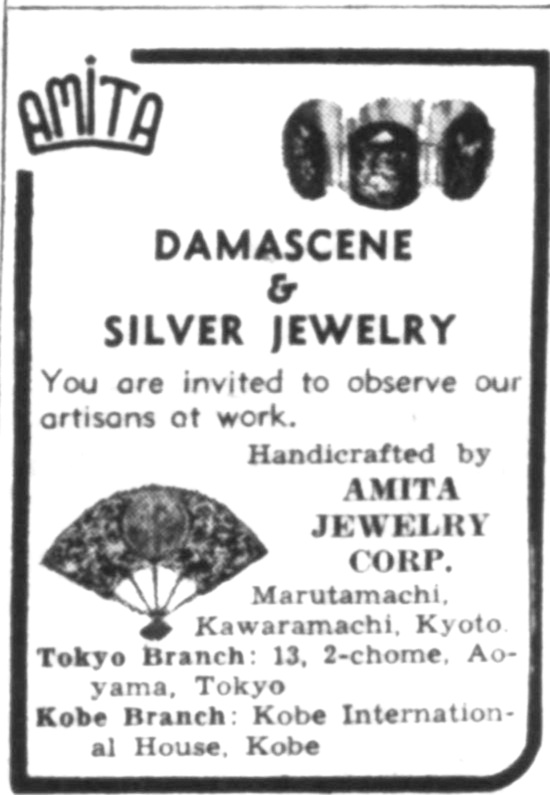
Japanese Damascene by Amita Jewelry Corporation

The heyday of Amita Jewelry Corporation came in the 1960s, when it continued to expand its business by opening new training schools, a Crafts Center in Kyoto in 1967, and stores in international airports and major hotels. By 1975, Amita was a leading manufacturer of Damascus jewelry.
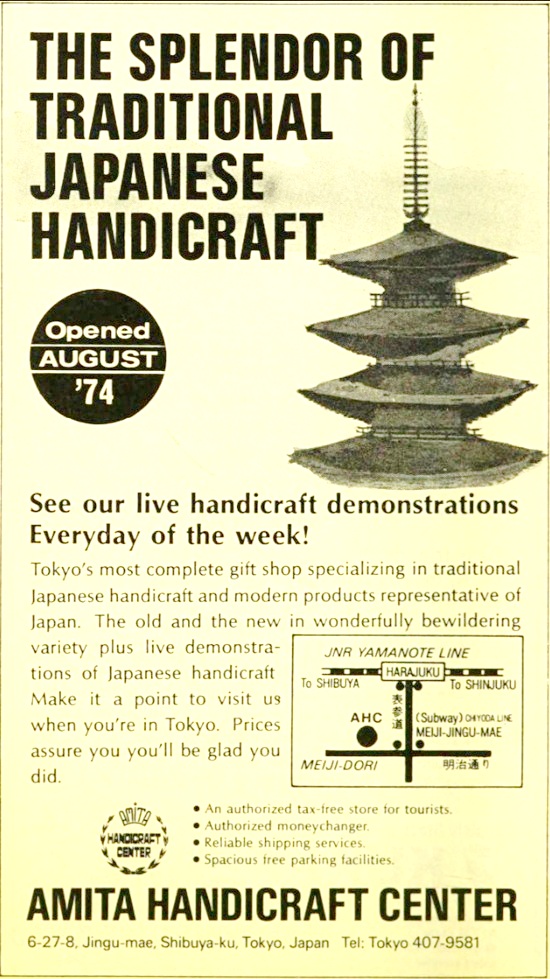
In the 1980s, Amita exhibited its products at national and international art and craft exhibitions, including EXPO.
After Shintaro Amita’s death in 1990, the Amita Corporation began to develop the tourism and restaurant business, which also included souvenir shops with various products from Amita.