Cohn Rosenberger Coro Jewelry History
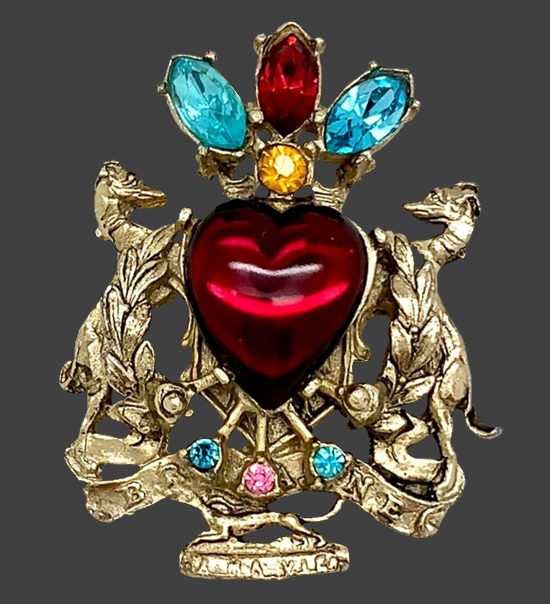
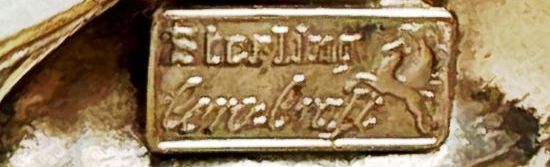
The most iconic jewelry brand of the 20th century, Cohn & Rosenberger, or Coro began its history in 1903.
Emanuel Cohn (1858 – 1910) first started in the jewelry business in 1876 as a traveling salesman for Newwitter & Rosenheim. He was later connected with Heilbronner, Brandt & Stern for about a year and a half. Then, he went into business for himself under the firm style of Stern, Cohn & Co on January 1, 1898.
In January, 1899, Stern withdrew and Emanuel Cohn admitted Nathan Cohn, when the style of E. Cohn & Co was assumed. On January 1, 1901, Carl Rosenberger (1872 – 1957) joined the firm as a partner. Born in Germany, Rosenberger came to the USA in 1886. He began his career as a jewelry salesman for Fishel, Nessler & Co. When Nathan Cohn withdrew January 1, 1903, the firm changed the name to Cohn & Rosenberger.

Unfortunately, Emanuel Cohn began feeling badly in 1909 and gradually gave up his business activities. He went abroad in the hope of regaining his health, but was unable to recuperate. He withdrew from the firm January 1, 1910, and the same year he passed away.

Carl Rosenberger took over Cohen & Rosenberger in January 1911, but he didn’t change the company’s name. In February 1913 Cohn & Rosenberger became corporation under the laws of the State of New York to deal in jewelry, enameled goods, etc., with a capital of $350,000. The incorporators were Carl Rosenberger (president), Jerome H. Oppenheimer (vice-president) and Charles H. Strauss (treasurer), all of 536 Broadway, New York.

Cohn Rosenberger Coro Jewelry History
According to the note published in The Jewelers’ Circular 1914-05-27, Horace M. Peck, receiver of the Ford & Carpenter Co., Providence, R. I., has sold to Cohn & Rosenberger the sample lines, stock, trunks and certain machinery and fixtures. Also, he sold the right to use the name of Ford & Carpenter Co. In other words, Cohn & Rosenberger purchased the business of the Ford & Carpenter as its successors.
Noteworthy, since the beginning, famous jewelry designer Urie F. Mandle had been with Cohn & Rosenberger for 26 years. The best designers worked for Coro: Adolph Katz, Gene Verecchio, Charles E. Pauzat, Oscar Placco, Robert Geissman, Carol McDonald, Marion Weeber, Sidney Pearl, and Lester Gaba. Among other notable members of Cohn & Rosenberger firm were Paul B. Paris, Jerrold Stern, Henry Rosenblatt, and others.
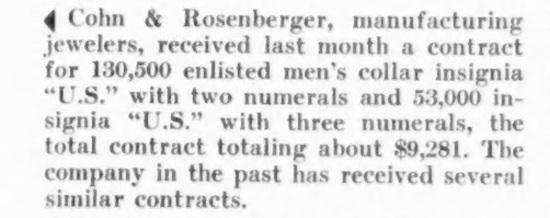
During the WWII the firm received contracts for men’s collar insignia, qualifications badges. In fact, Cohn & Rosenberger was the largest recipient of defense work among the jewelry firms.
On April 28, 1954 Carl Rosenberger was honored by leading costume jewelry executives, at the Hotel Vanderbilt, New York. He was presented with a plaque for “his outstanding efforts in the fight to protect democratic liberties”.
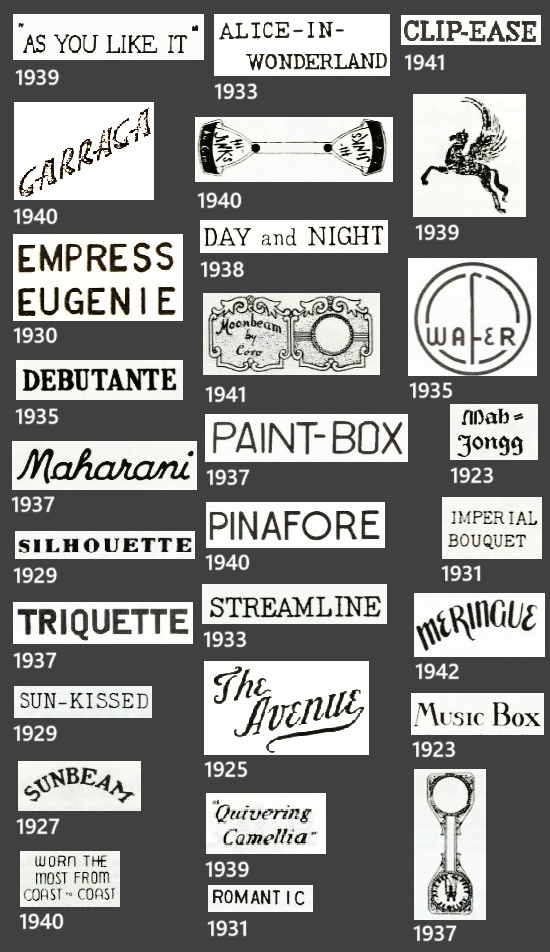
Cohn & Rosenberger trademarks and jewelry

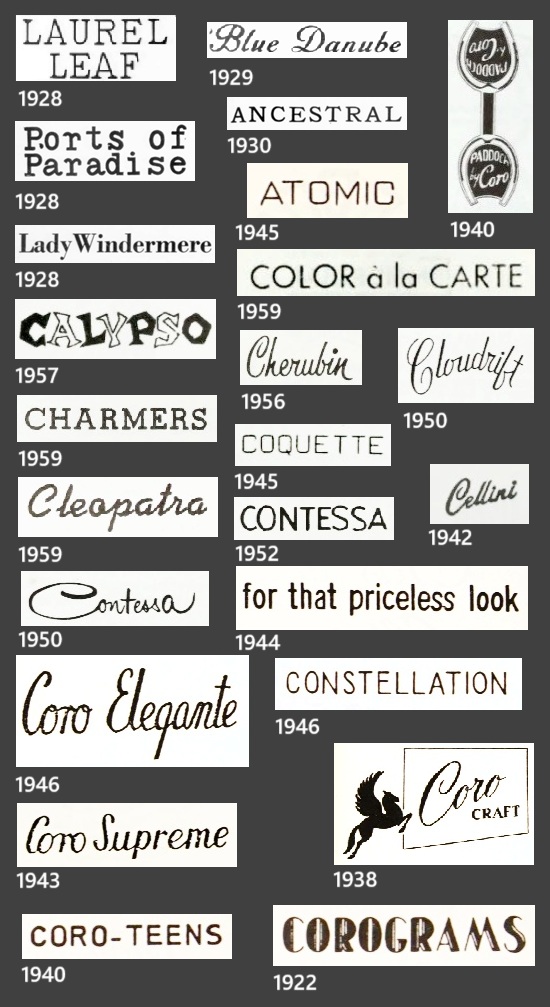
The firm of Cohn & Rosenberger launched hundreds of trademarks on manufacture of various types of jewelry. Coro, the most popular among them, became a division of Cohn & Rosenberger in 1940. Gerald Rosenberger, son of Carl Rosenberger, accepted the chairmanship of Coro, Inc in 1943. Assuming his post Gerald Rosenberger said: “Naturally I am proud to do what my father did with such distinction for so many years. It is, if I may say so, a heritage of my family…”.

In 1967, Coro ceased to be a family business. Richton Intl. bought 51% of the company’s shares, and in 1970 acquired the remaining shares. Coro went out of business in 1979, although Canadian subsidiaries of Coro Inc continued operations into the 1990s.

Gerald Eichberg Rosenberger (1904 – 1967)
Like his father, Gerald died of a heart attack in January 1967 in his office at 47 West 34th Street. He joined his father’s firm in the 1920s, after graduation from Columbia University and the University of Pennsylvania. He held positions from treasurer and general manager in the 1930s to president in 1943.
By the time of his death, Coro was the largest manufacturer of costume jewelry in the world, with more than 3,500 employes, and annual sales exceeding $26-million. Its offices and factories were in New York, Providence, Toronto and Great Britain.

Ads

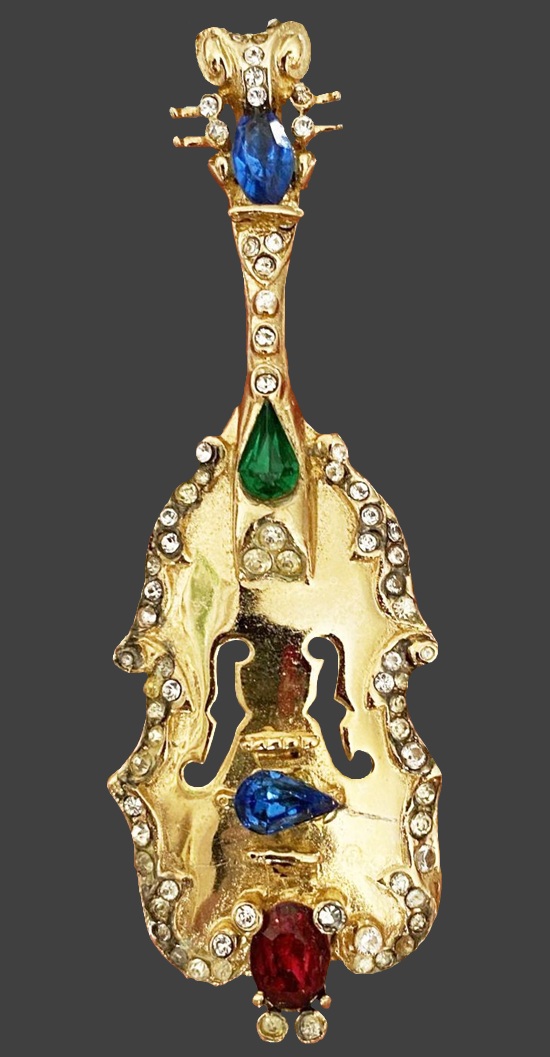
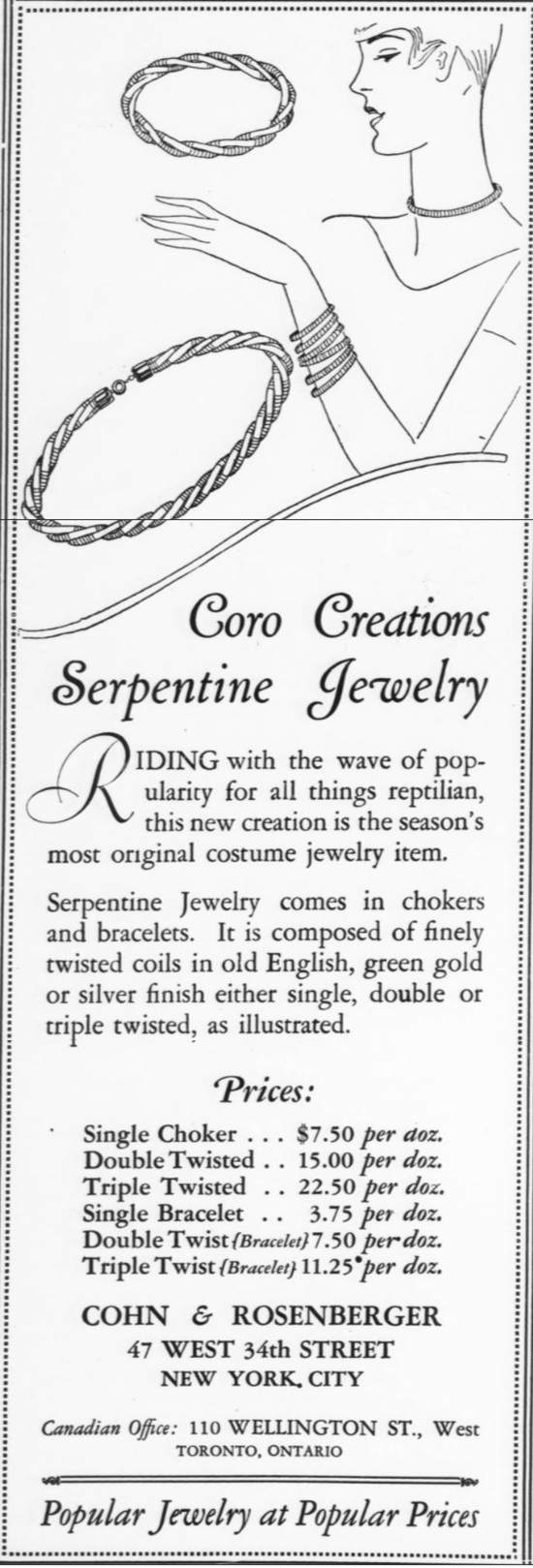
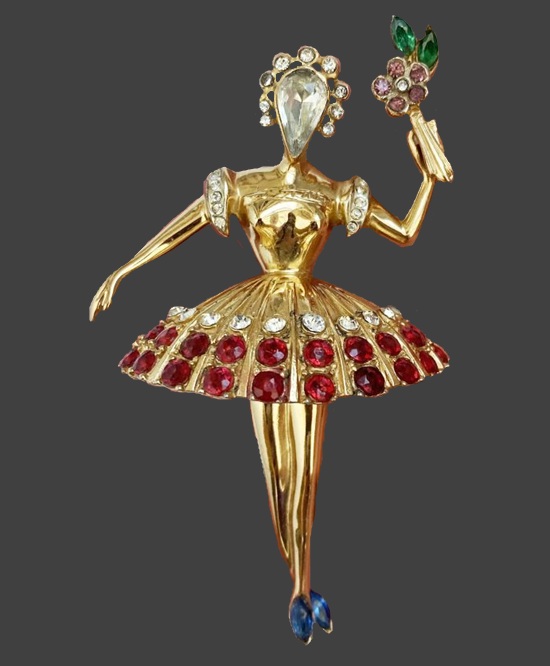
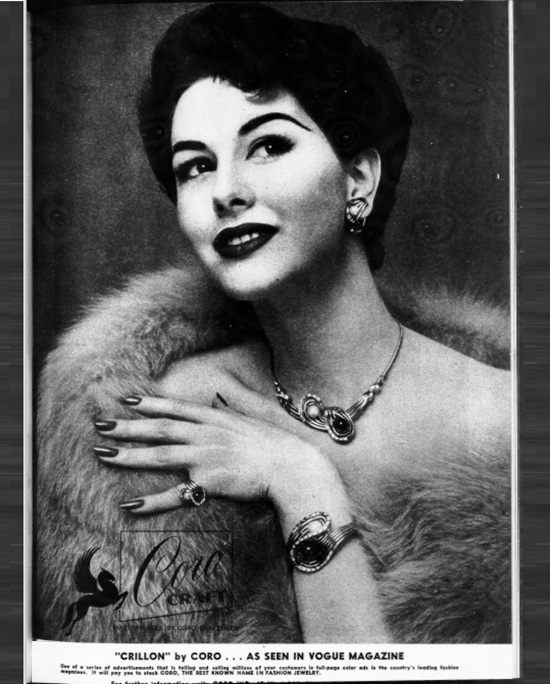
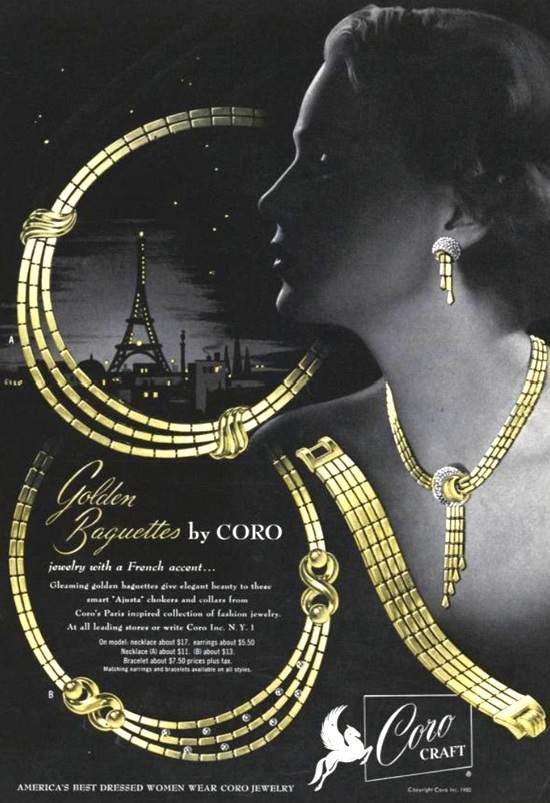
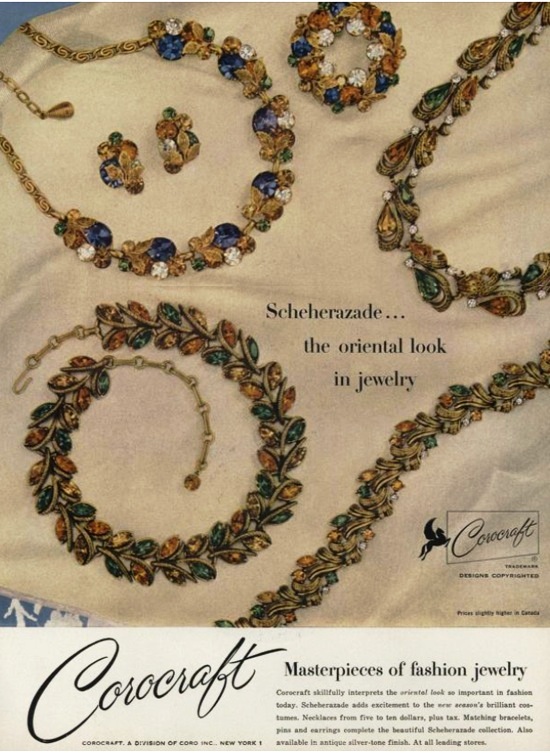
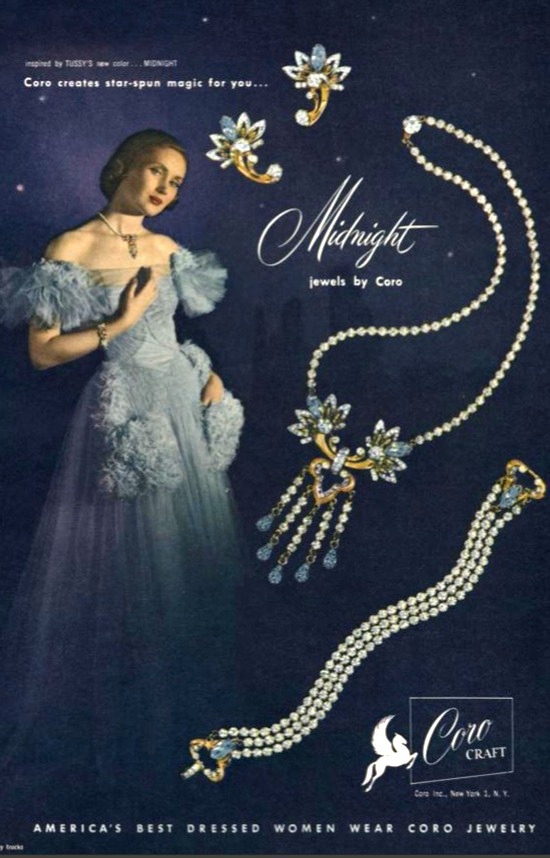
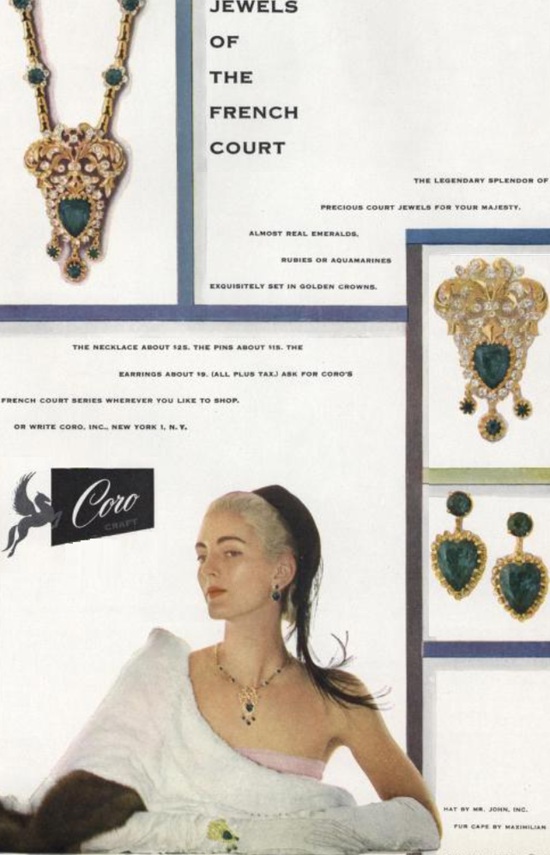
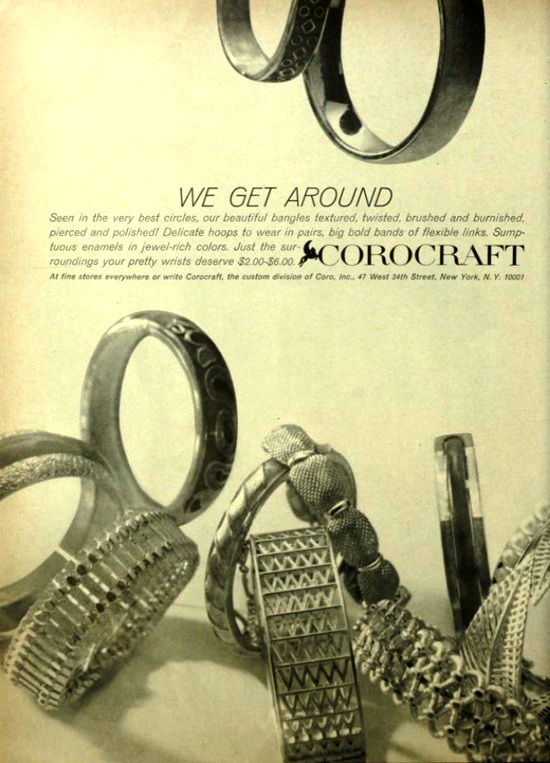
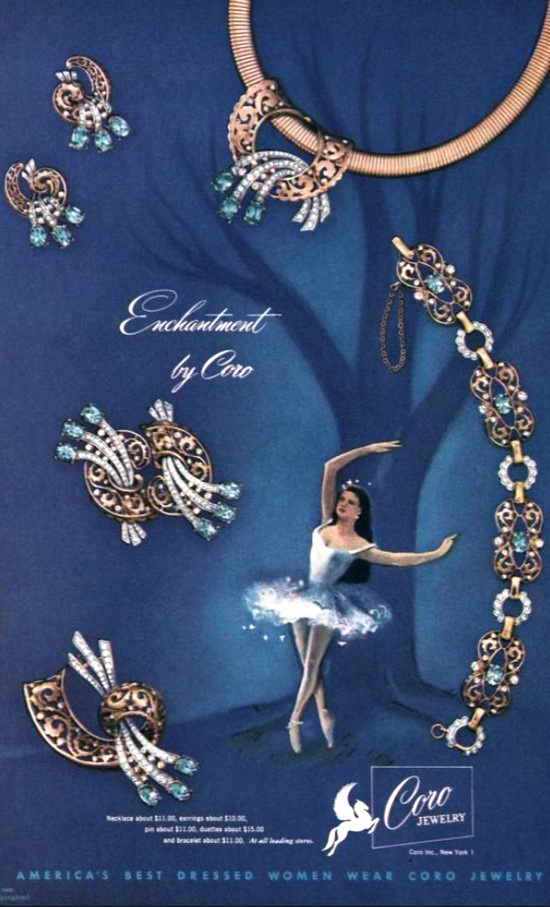
Coro Jewelry and Ads