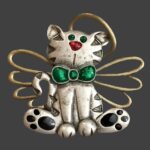
ORA Originals Jewelry History and Symbolism
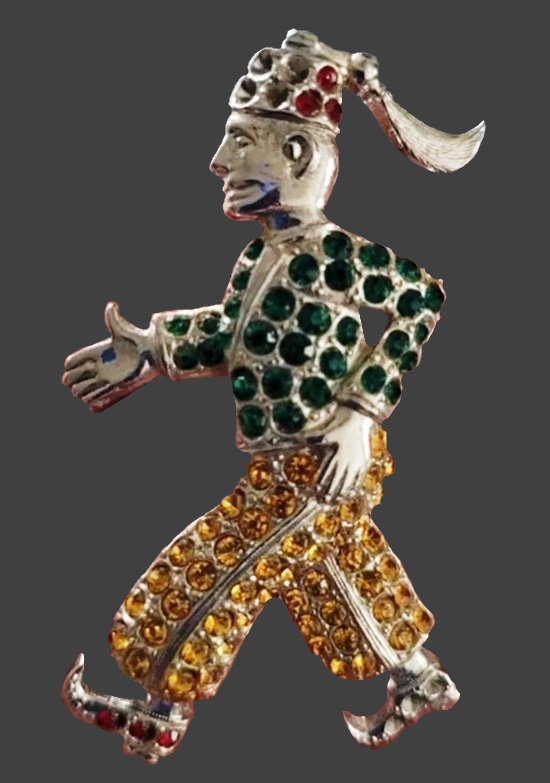
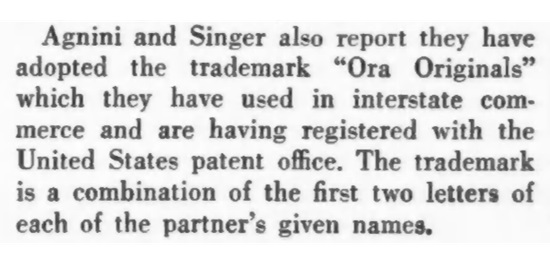
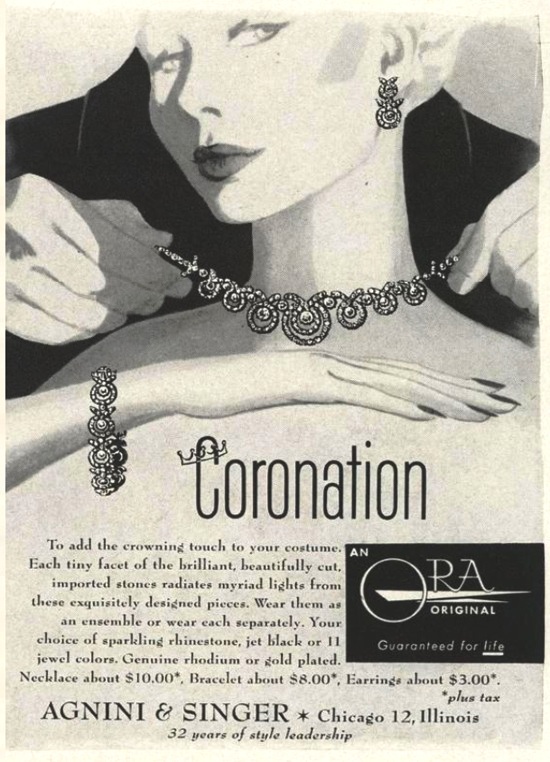
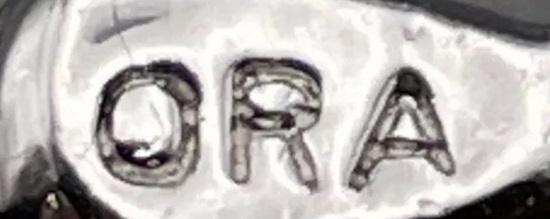
Agnini & Singer, Chicago rhinestone jewelry manufacturers since 1921, launched ORA jewelry trademark in 1950. Notably, the ORA trademark is a combination of the first letters of the company founder Oreste J Agnini, Sr.
A native of Naples, Italy, Oreste Agnini (1875 – 1959) started jewelry business in partnership with his brother Hector and Ralph Singer. Agnini and Ralph Singer were responsible for jewelry design, and Hector for the production and sales.

Oreste Agnini
18-year-old Oreste Agnini came to the United States in 1903 and settled in Chicago, Illinois. Noteworthy, Agnini received a good musical education in Naples. He later embodied this part of his life in jewelry. In addition, he was an artist, which later helped him in drawing jewelry sketches. One of his collections included brooches and pins in the form of a piano, violin, guitar and other musical instruments.
Rafaele Cantalupi
Born in Italy, Rafaele Cantalupi (1886 – 1963) came to the USA in 1908, and was naturalized in 1927 in Chicago, Illinois as Ralph Wolf Singer. Oreste Agnini and Ralph Singer won enviable reputations as creative designers and master craftsmen of fine jewelry.
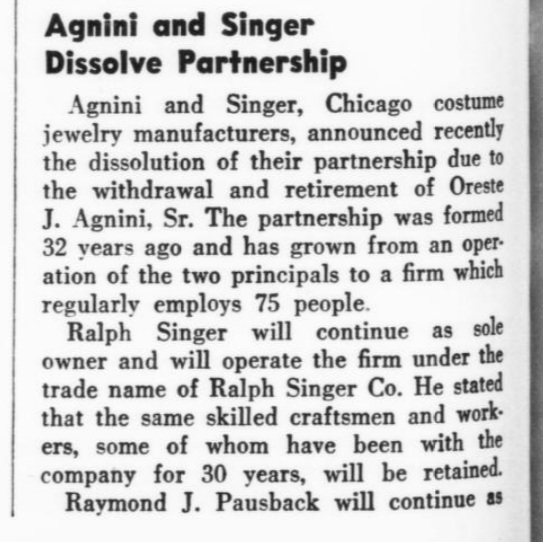
The dissolution of their partnership
Due to the withdrawal and retirement of Oreste J Agnini Sr in 1953, Agnini and Singer announced the dissolution of their partnership. “Formed 32 years ago, the partnership has grown from an operation of the two principals to a firm which regularly employs 75 people”.
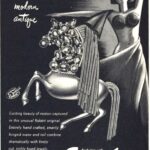
The main office and factory of Agnini & Singer was at 656 N. Western Ave, Chicago. In 1954 Ralph Singer Company had showrooms at 366 Fifth Ave, New York, Wisconsin, and San Francisco, California. In 1952 Agnini and Singer announced the first national advertising campaign in its history promoting the “Ora Originals” line of costume jewelry. “Ora Originals” ads appeared in Harper’s Bazaar, Vogue, and The Jewelers’ Circular.

History of ORA Originals
Ralph Singer continued as sole owner and operated the firm under the trade name of ORA and Ralph Singer Co. Raymond J. Pausback, his son-in-law, continued as office manager and general manager. Oreste J. Agnini, Jr., son of the retiring partner, retained the position of production manager.
After the death of Ralph Singer in 1963, Raymond Pausback (1908-1988) continued the business and kept the name of the company. He retired in 1980 and sold the company. Apparently Ralph Singer Co was still in business, listed in the 1994 Jewelers’ Circular.
Anne Geyer
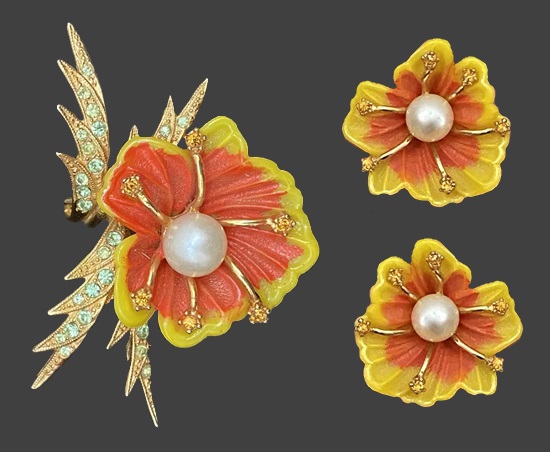
According to Jeweler’s Circular Keystone (1954), Anne Geyer, formerly head designer of Tiffany & Co. and other firms, began designing costume jewelry pieces exclusively for Ralph Singer. “Mrs. Geyer has designed precious, exclusive jewelry for reigning queens, famous motion picture stars, such as Ava Gardner, and society leaders. This is the first time she has turned her talents to costume jewelry”.

Symbolic ORA Originals Jewelry
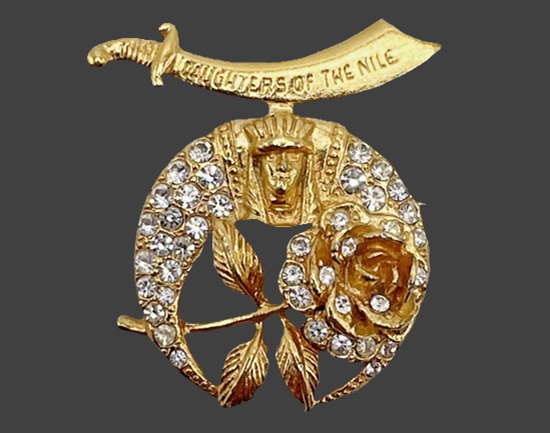
Noteworthy, most of the ORA designs reflect the logos and symbols of the Masonic movement Shriners International. Thus, the figurative brooches in the form of a man in a symbolic fez headdress, show the main representative of the Shriners movement. Shriners International movement was very popular just during the company’s formation and active work.

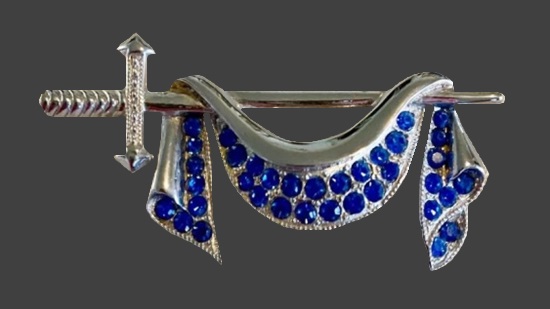
A crown and a sword symbolize a worldwide brotherhood based on the Masonic principles of brotherly love and leadership in society.
Masonic Shriners International movement
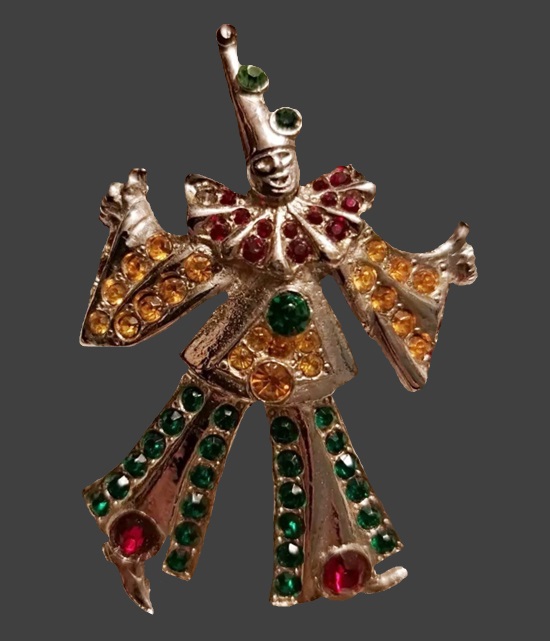
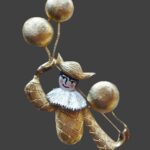
Decorations in the form of circus animals and clowns are also not accidental. They symbolize the annual Shriners Circus, which held a charity fundraiser.
By the end of the 1930s, there were about 340,000 members of this Masonic Shriners International movement in the United States. It is important to note that the members of the Shriners movement were the first in prestige and wealth among secret societies. In addition, the Shriners organization included the most prominent citizens of the city. Undoubtedly, such a person was Oreste Agnini, who created the first jewelry production in Chicago.
The Shriners Brotherhood annually met for the Imperial Session in the largest cities of the United States. In Chicago, where Oreste lived and worked, such a session was held precisely during the period of his activity – 1943, 1945, 1949, and 1955.

ORA Originals Jewelry