Theodore Foster Jewelry Company History

According to Foster & Bro advertisements from the 1900s, Theodore Waters Foster (1849 – 1928) counted 1873 as the year his company began its history. A native of New York City, Theodore W. Foster began his jewelry business as a partner in White & Foster in 1873. Four years later, the company was renamed White, Foster & Co when Samuel H. Bailey became the third partner.
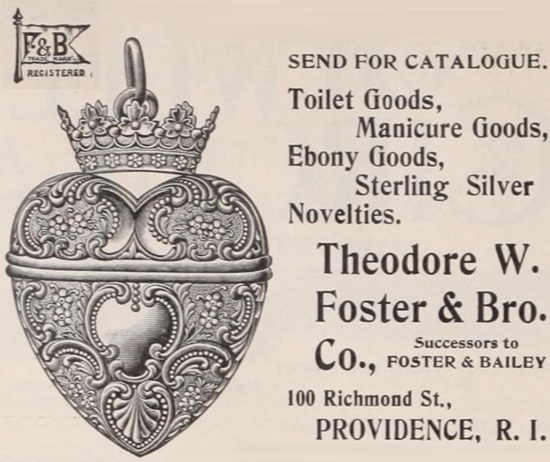
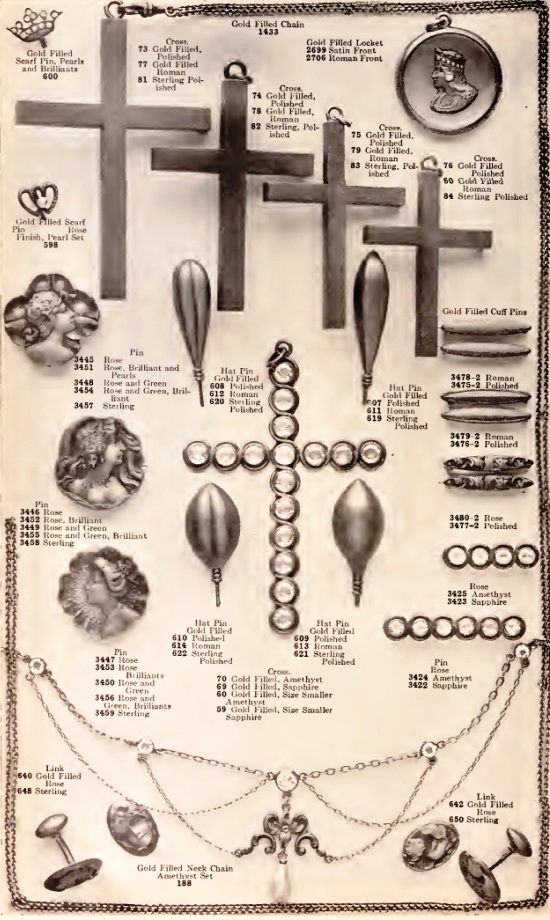
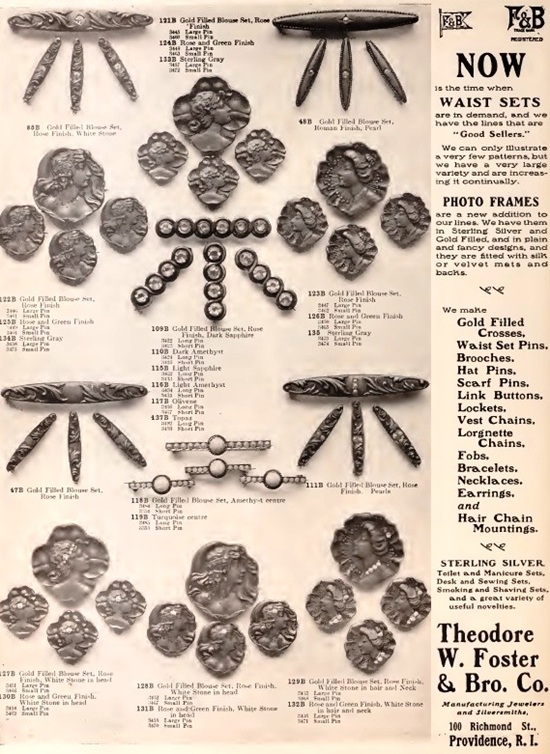
In 1877, after Walter E. White retired, the renewed Foster & Bailey company lasted for 20 years. Theodore Foster did not become the sole owner of the company until 1898. His company, Theodore W. Foster & Bro. Co, located at 100 Richmond Street, Providence, manufactured gold and silver jewelry. In addition, the product range included cigarette cases, manicure sets, picture frames, hairbrushes, mirrors and other novelty items.

By the early 1900s, Foster & Bro employed approximately 270 people, and had branches and sales representatives in major U.S. cities, including New York, Los Angeles, and Chicago. Theodore’s nephew, Ernest L. Fuller was secretary and his brother, Isaac F. Foster, superintendent. In May, 1898, the Theodore W. Foster & Bro. Co. was incorporated and Clyde became vice-president and director. In 1914 he became general manager, and upon the death of his father, in 1928, became president and treasurer.

Theodore Clyde Foster died in 1936, and that was the beginning of the company’s decline. Instead of jewelry, the firm continued production of custom-made compacts, lipstick containers and other metal specialties. In the early 1950s, the company came under the control of Stephen J. Clark, who renamed it Esco-Foster, Inc. However, the renewed company ceased to exist in 1954.
History of Theodore Foster Jewelry Company

The son of Chauncey and Ophelia (Remington) Foster, Theodore Waters Foster was born May 19, 1847, in Delta, N. Y. Aged four years old he moved with his parents to Pawtucket, R. I. His father Benjamin Hood, a manufacturing jeweler received a contract from the government for the making of army buttons, metal numbers, insignias, etc.
While still a school boy Theodore first learned the use of tools employed in the jewelry industry. Thanks to his father, Theodore formed a love for the jewelry business and made a decision to become a manufacturing jeweler.

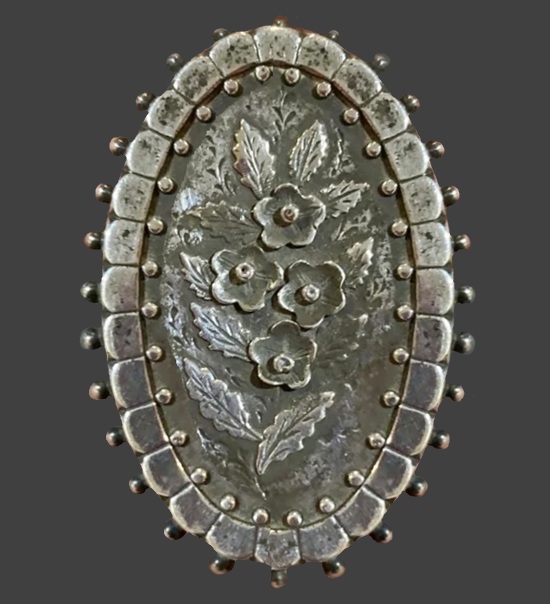
Foster Antique Jewelry