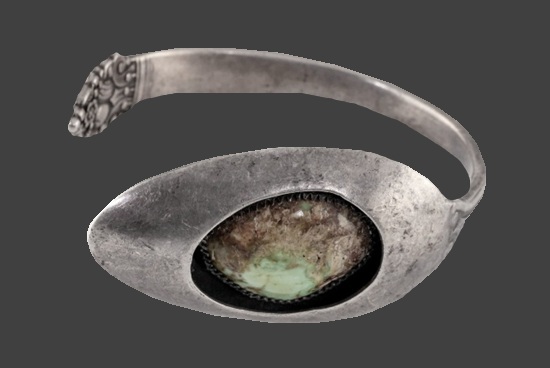
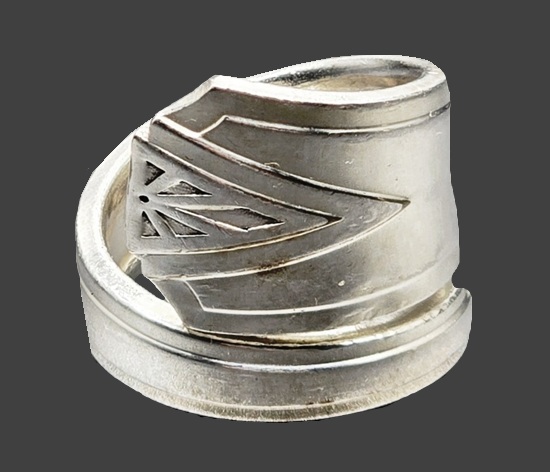
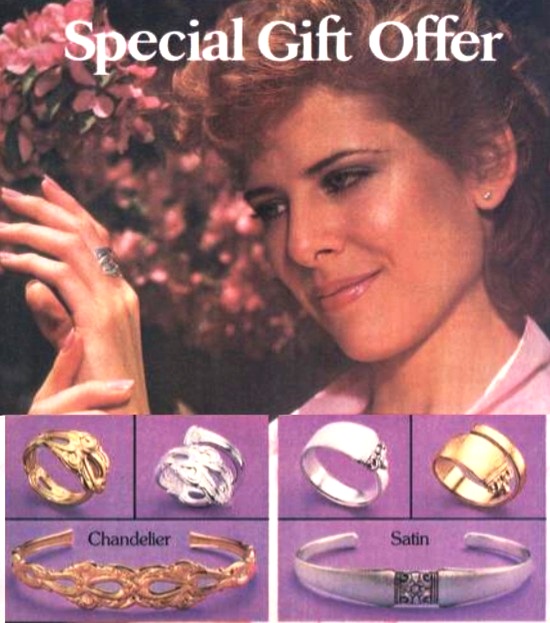
Crafted by Oneida Sterling Flatware Jewelry
John Humphrey Noyes (1811 – 1886) founded the Oneida Community at Kenwood, New York, in 1848. Separated from the rest of humanity, the members of this contradictory utopian community supported themselves through various crafts. One of these crafts, silversmithing, later made Oneida a world-famous brand of silverware.
John Humphrey Noyes and his wife Harriet Worden Noyes had a son, Pierrepont Burt Noyes (1870 – 1959), who spent his entire childhood in the Oneida community. Pierrepont subsequently made a major contribution to the formation, development and success of the Oneida Silversmiths Company. He had been the driving force behind the company for 55 years.
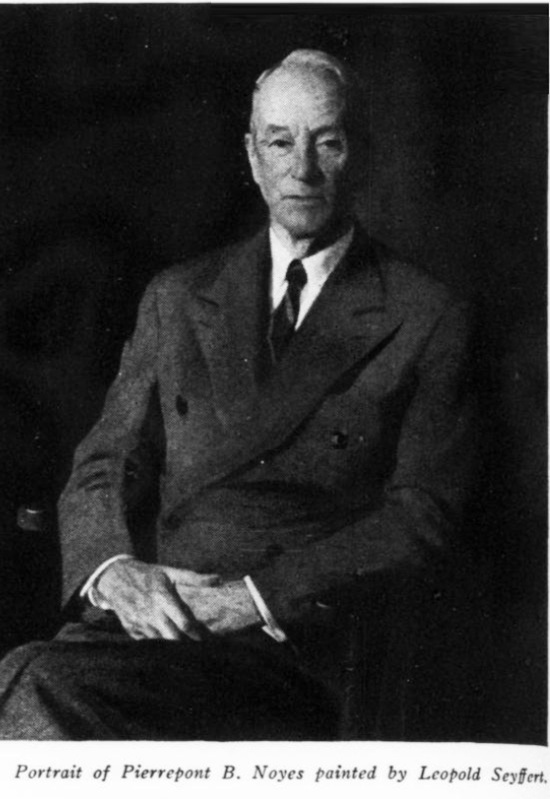
Pierrepont Noyes retired on his 80th birthday, August 18, 1950, after 40 years as president of Oneida, Ltd. Upon accepting his resignation, the company’s management retained him on the Executive Committee and as a director, and also named him Honorary President.
Although Pierrepont Noyes left his family home at 16 to study and work in New York and Chicago, his deep connection to the Oneida community drew him back to his home. Meanwhile, in Chicago, he held an executive position at a giant silver mining concern, earning five times the salary he would later receive as Oneida’s general manager, earning $1,500 a year.
For him, Mansion House (the original headquarters of the Oneida community) was his home. He lived there until his death in 1959.
Difficult times
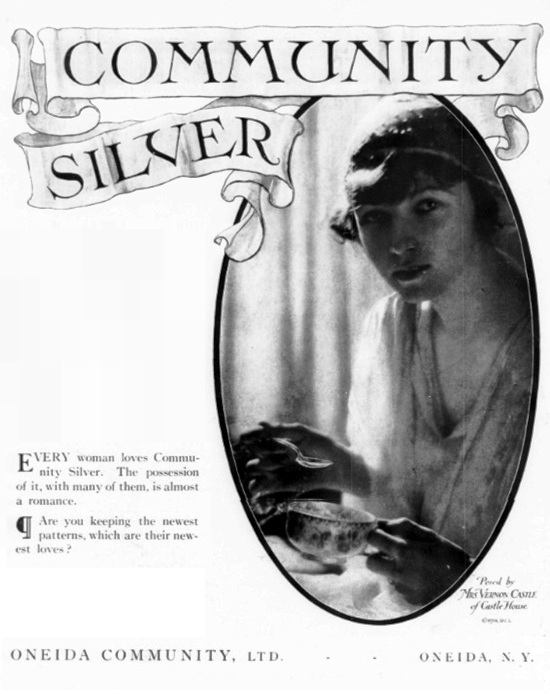
Oneida Community also experienced difficult times. For example, from 1929 to 1933, during the Great Depression, management informed workers that wages had to be cut. At this point, Pierrepont Noyes spent more on advertising for the following year than it had earned on Community Plate in the entire previous year. In subsequent years, the company maintained a relatively high advertising budget.

The largest print advertising contract
In 1907, he signed the largest print advertising contract of its time. Particularly, a contract to advertise on the back cover of The Jewelers’ Circular (then a weekly) for 52 issues—five years! Later, he began buying full pages in national consumer magazines. The Oneida community has increased its annual turnover several times over thanks to advertising.
He had vision, foresight, and, perhaps most importantly, courage. This was necessary to take a business from a small fortune to a leading position, surviving four or five economic downturns and two major wars. After all, even the smartest person can’t anticipate every economic swing.

Purchase of Wm. A. Rogers
In 1929 Oneida bought Wm. A. Rogers, Ltd., and 1881 Rogers. Under their trademarks, they began producing lower-cost, lower-quality cutlery. In 1935, Oneida Community was renamed Oneida Ltd. Over time, this company grew into a transnational corporation, conducting business simultaneously in the United States, Canada, Mexico, Latin America, Europe, and Asia.
Unfortunately, at the beginning of the 21st century, Oneida gradually began to lose ground as a result of economic crises and unable to compete with Chinese manufacturers of similar products.
Saratoga Springs Authority
Pierrepont Noyes’ practical qualities as an administrator and humanitarian were also recognized by then-New York Governor Franklin D. Roosevelt. Roosevelt awarded him $5,000,000 in public funds and appointed him head of a commission tasked with modernizing, rebuilding, and promoting the Saratoga Springs resort for the benefit of the public.
Noyes achieved remarkable success, making the resort the finest in the world, generating significant annual revenue for the state. He served as president of the Saratoga Springs Authority from 1933.

Collaboration with Jon Whitcomb since 1943
Oneida illustrations by renowned artist John Whitcomb (1906–1988) elevated Oneida Community silverware advertising head and shoulders above any other advertisements. Millions of unmarried girls recognized themselves in John Whitcomb’s illustrations, and many collected them for their scrapbooks.
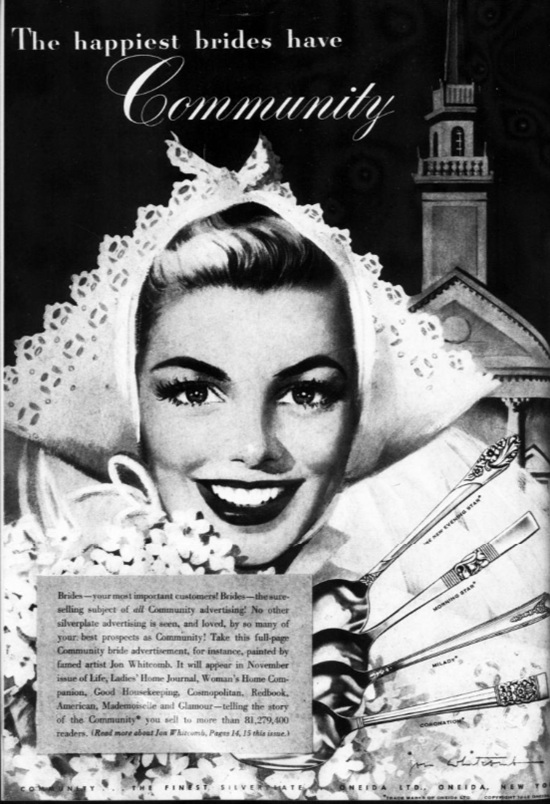
Oneida advertisements, distributed nationwide, graced the pages of publications such as Life, Ladies’ Home Journal, Woman’s Home Companion, Good Housekeeping, Cosmopolitan, Redbook, American, Mademoiselle, and Glamour, telling the story of the community.

Other significant executives of the Oneida company included Martin Keller (1883 – 1953), who worked for the company from 1906 to 1953. He soon became a director and oversaw production from 1945, serving as the company’s vice president.