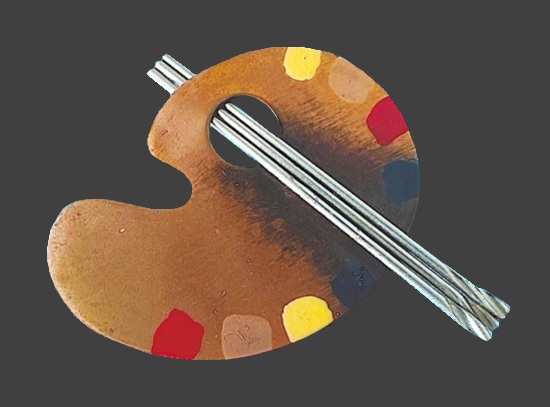
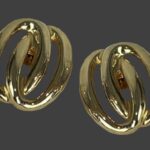
Modernist Jewelry Designer Francisco Rebajes
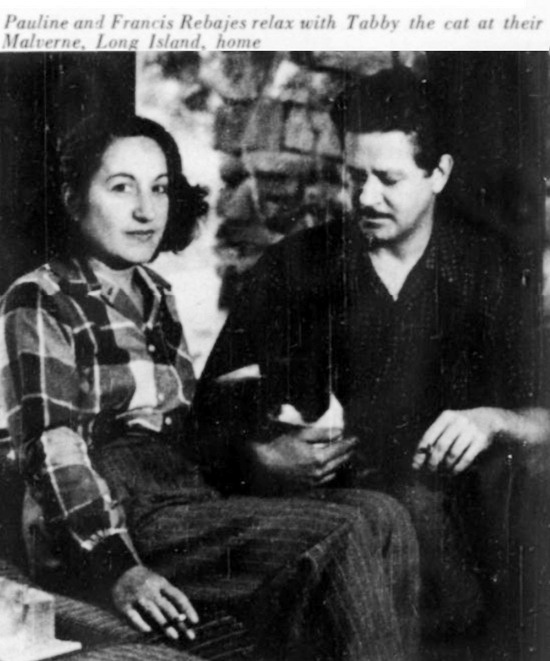
Born in the Dominican Republic, Francisco Torres Rebajes (1906 – 1990) was one of six children of shoe maker Antonio Torres Ros and Francisca Rebajes de Torres. He came to New York in 1923 to try his luck.
His first jobs were as a janitor, then as a grocery delivery boy, where he was fired for shoplifting. In the late twenties, the unemployed Rebajes moved to Harlem, where he slept on Harlem rooftops and in penthouse lobbies, earning his living doing odd jobs.
He eventually got a job in small cafes, then moved to larger cafes, where he was responsible for plating soups, salads, and desserts. From then on, he was called Frank, a name he liked. It was only marriage that changed Rebajes’s routine.
First creation
Despite Frank’s meager financial situation and her parents’ protests, Pauline decided to marry him. For the next two months, while he and Pauline were without any means of support, Frank tried to find a steady job. One day, he was wandering down the street and picked up some tin cans, cut them up, beat them off, and molded them into figures. His first creation was a horse.
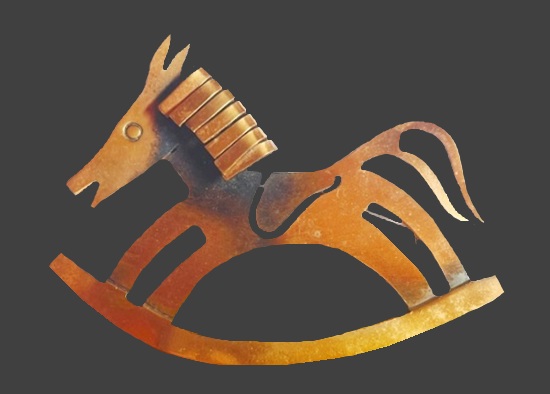
Rebajes soon had a “zoo”, which he displayed on an old ironing board at the annual Washington Square Street Art Show. Among the spectators was Juliana Force of the Whitney Museum of American Art, who bought his entire collection for thirty dollars.
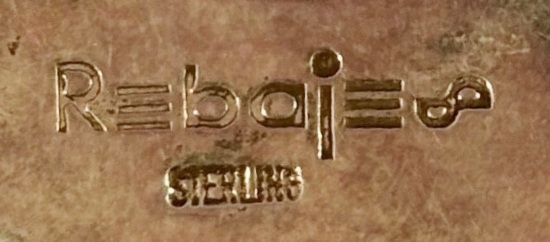
With the proceeds, Rebajes rented a covered walkway between two buildings on Fourth Street in the Village. On his first day in the new building, Frank used a piece of rock as an anvil. On it, he hammered a piece of aluminum into an ashtray, which he promptly sold for thirty-five cents. He also made new objects in the shape of animals and fish.
First Customers
His first customers were Village intellectuals who understood what real art was. Soon The Latin Quarterly wrote about the talented craftsman. “Don’t miss the opportunity to visit Francisco Rebajes in his tiny shop… You can actually buy a souvenir there that is definitely made by the artist…”

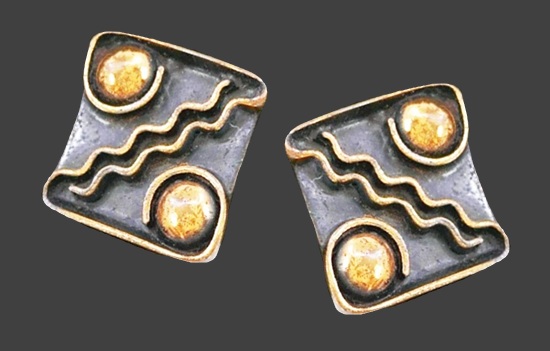
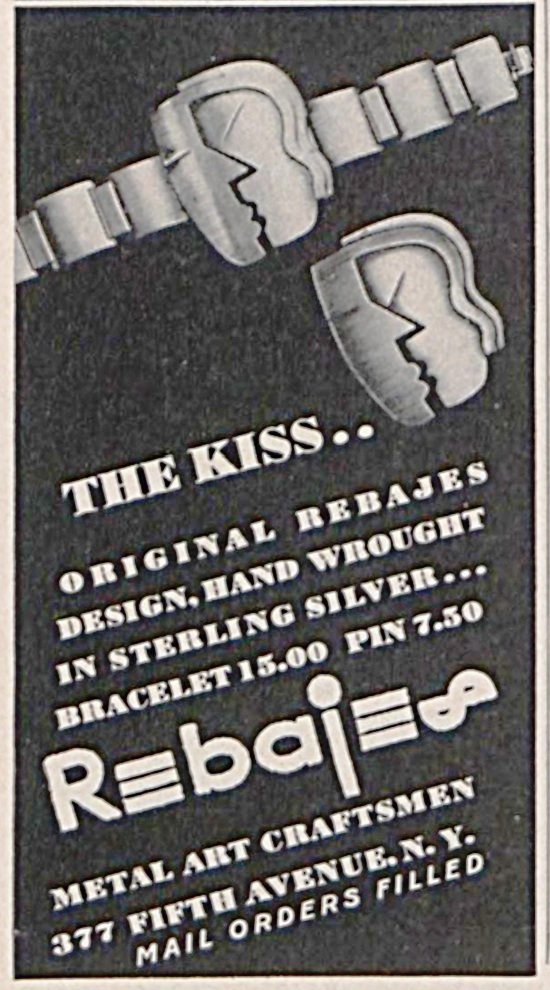
A year later, Frank had earned enough money to rent a store next door. He began using brass and began to collect an extraordinary collection of hammers and tools, essential to the originality of his creations. Soon he was able to buy another shop, hire one or two of his own employees, install machines. Frank’s business grew so quickly that he was soon able to move to Fifth Avenue.
Business on Fifth Avenue

By 1935, he was hiring workers to make jewelry while continuing to design and sell jewelry. His work grew, and he sold his unique pieces throughout the United States. In 1937, he won a prize at the International Exhibition in Paris, and these pieces were soon displayed at the Metropolitan Museum.
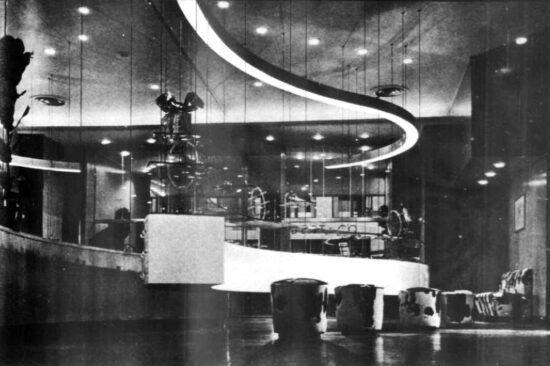
In the early 1960s, he sold the business to his manager Otto Bade. He then moved to Spain, the homeland of his ancestors, where he lived and worked until his death in 1990.
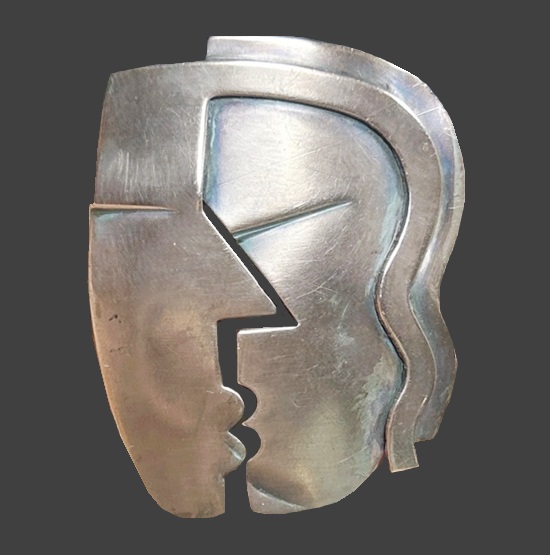
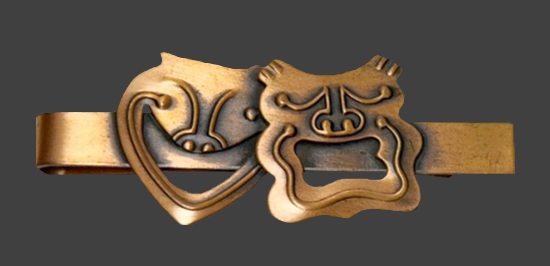
Rebajes Modernist Jewelry and Ads